| Reactivity | RtSpecies Glossary |
| Applications | Bioactivity |
| Format | Carrier-Free |
| Details of Functionality | Measured by the ability of the immobilized protein to enhance BMP-2 induced alkaline phosphatase activity in C3H10T1/2 mouse embryonic fibroblast cells. Nobta, M. et al. (2005) J. Biol. Chem. 280:15842. The ED50 for this effect is 0.5-2.0 µg/mL. |
||||||||
| Source | Mouse myeloma cell line, NS0-derived rat Jagged 1 protein
|
||||||||
| Accession # | |||||||||
| N-terminal Sequence | Ser32 |
||||||||
| Structure / Form | Disulfide-linked homodimer |
||||||||
| Protein/Peptide Type | Recombinant Proteins |
||||||||
| Gene | Jag1 |
||||||||
| Purity | >90%, by SDS-PAGE visualized with Silver Staining and quantitative densitometry by Coomassie® Blue Staining |
||||||||
| Endotoxin Note | <0.10 EU per 1 μg of the protein by the LAL method. |
| Dilutions |
|
|
| Theoretical MW | 141.7 kDa (monomer). Disclaimer note: The observed molecular weight of the protein may vary from the listed predicted molecular weight due to post translational modifications, post translation cleavages, relative charges, and other experimental factors. |
|
| SDS-PAGE | 180 kDa, reducing conditions |
|
| Publications |
|
| Storage | Use a manual defrost freezer and avoid repeated freeze-thaw cycles.
|
| Buffer | Lyophilized from a 0.2 μm filtered solution in PBS. |
| Purity | >90%, by SDS-PAGE visualized with Silver Staining and quantitative densitometry by Coomassie® Blue Staining |
| Reconstitution Instructions | Reconstitute at 200 μg/mL in sterile PBS. |
Rat Jagged1 was the first ligand for Notch identified in mammals. Since both the ligands and receptors are transmembrane proteins, direct cell-cell interactions are thought to be required for activating Notch signaling. Jagged1 is synthesized as a precursor protein that contains a 21 aa signal sequence, a 1048 aa extracellular region, a 25 aa transmembrane (TM) segment and a short, 226 aa cytoplasmic domain. The large extracellular region has a DSL (Delta, Serrate, Lag-2 consensus sequence) domain followed by 16 EGF-like repeats, and a cysteine-rich (CR) region (1). The extracellular region of rJagged1 binds to multiple Notch receptors on the cell surface as well as in solid phase binding studies. The DSL motif is necessary for binding to Notch receptors and the EGF repeats modulate the affinity of the interaction with Notch receptors (2). Notch signaling is implicated in many developmental processes in a variety of cell types. Jagged-Notch signaling specifies cell fate, regulates pattern formation, defines boundaries between different cell types, and modulates cell proliferation and differentiation. Some specific areas where Jagged is involved include hematopoiesis, myogenesis, neurogenesis and development of the vasculature (3). For instance soluble, non-transmembrane forms of Jagged1 influence behavior in fibroblast cells leading to characteristics exhibited by endothelial cells during angiogenesis (4). Soluble Jagged1 is also capable of maintaining the survival and enhancing the expansion of human stem cells that are capable of reconstituting hematopoietic lineages in vivo (5). Furthermore, Jagged1 is implicated in human disease: Alagille syndrome, an autosomal dominant disorder characterized by defects in liver, heart, eye, skeletal, craniofacial tissues, and kidney, is caused by mutations in Jagged1 (6). Depending on cell types and how soluble forms of the ligand are presented, ligand binding can result in activation or inhibition of Notch signaling (7). Rat Jagged1 shows 98% and 99% aa identity to human and mouse Jagged1 extracellular domains respectively. Relative to the extracellular region of rat Jagged2, the aa identity is 58%.







![Immunocytochemistry EGFR Antibody [Unconjugated]](https://images.novusbio.com/images/antibody/EGF_R_AF231_Immunocytochemistry__Immunofluorescence_21143.jpg)
![Flow Cytometry EGFR Antibody [Unconjugated]](https://images.novusbio.com/images/antibody/EGF_R_AF231_Flow_Cytometry_20401.jpg)
![Western Blot EGFR Antibody [Unconjugated]](https://images.novusbio.com/images/antibody/EGF_R_AF231_Western_Blot_19925.jpg)



The concentration calculator allows you to quickly calculate the volume, mass or concentration of your vial. Simply enter your mass, volume, or concentration values for your reagent and the calculator will determine the rest.


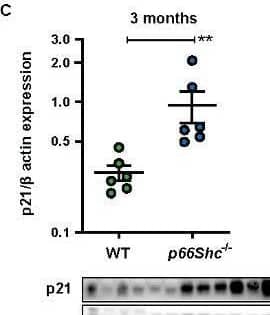
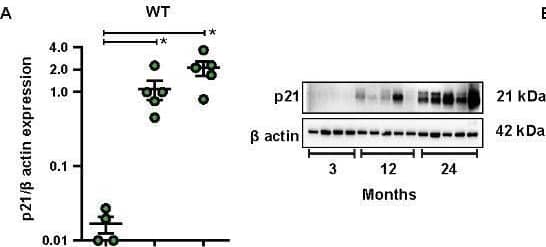
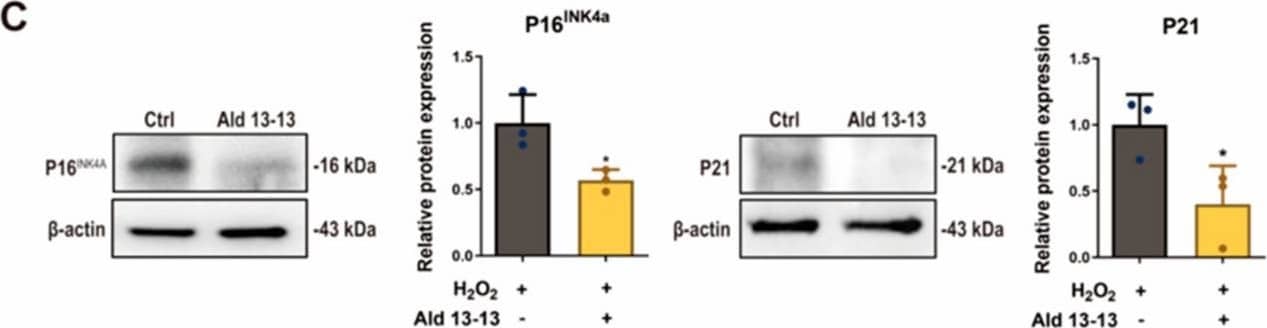
![Immunohistochemistry Caspase-3 Antibody [Unconjugated] - Active](https://images.novusbio.com/images/af835_human-mouse-active-caspase-3-affinity-purified-pab-41202410331943.jpg)
![Western Blot Caspase-3 Antibody [Unconjugated] - Active](https://images.novusbio.com/images/af835_human-mouse-active-caspase-3-affinity-purified-pab-812025554170.jpg)
![Western Blot Caspase-3 Antibody [Unconjugated] - Active](https://images.novusbio.com/images/af835_human-mouse-active-caspase-3-affinity-purified-pab-8120255534731.jpg)
![Western Blot ERK2 Antibody [Unconjugated]](https://images.novusbio.com/images/antibody/ERK2_AF1230_Western_Blot_5097.jpg)
![Knockout Validated ERK2 Antibody [Unconjugated]](https://images.novusbio.com/images/antibody/ERK2_AF1230_Knockout_Validated_22864.jpg)
![Immunohistochemistry ERK2 Antibody [Unconjugated]](https://images.novusbio.com/images/antibody/ERK2_AF1230_Immunohistochemistry_20696.jpg)
![Immunohistochemistry Notch-2 Antibody [Unconjugated]](https://images.novusbio.com/images/antibody/af3735_human-notch-2-intracellular-domain-affinity-purified-pab-immunohistochemistry-1862024111356..jpg)
![SDS-Page TNF-alpha [Unconjugated]](https://images.novusbio.com/images/protein/TNF-alpha_210-TA_256.jpg)
![Bioactivity TNF-alpha [Unconjugated]](https://images.novusbio.com/images/protein/TNFalpha_210TA_1658.jpg)
![SEC-MALS TNF-alpha [Unconjugated]](https://images.novusbio.com/images/210-ta_recombinant-human-tnf-alpha-protein-sec-mals-35202312244..jpg)


![Immunocytochemistry Notch-4 Antibody [Unconjugated]](https://images.novusbio.com/images/antibody/af3847_human-notch-4-intracellular-domain-affinity-purified-pab-immunocytochemistry-3092021102949.jpg)
![Immunocytochemistry/ Immunofluorescence c-jun [p Ser63] Antibody (SY0297)](https://images.novusbio.com/images/c-jun-p-Ser63-Antibody-SY0297-Immunocytochemistry-Immunofluorescence-NBP2-67471-img0006.jpg)
![Western Blot c-jun [p Ser63] Antibody (SY0297)](https://images.novusbio.com/images/c-jun-p-Ser63-Antibody-SY0297-Western-Blot-NBP2-67471-img0008.jpg)
![Western Blot c-jun [p Ser63] Antibody (SY0297)](https://images.novusbio.com/images/c-jun-p-Ser63-Antibody-SY0297-Western-Blot-NBP2-67471-img0009.jpg)