| Reactivity | MuSpecies Glossary |
| Applications | Binding Activity |
| Format | Carrier-Free |
| Details of Functionality | Measured by its binding ability in a functional ELISA. When rmC4.4A/LYPD3 is immobilized at 0.5 μg/mL (100 μL/well), rhGalectin-3 binds with an apparent KD <80 nM. |
| Source | Mouse myeloma cell line, NS0-derived mouse C4.4A/LYPD3 protein Leu33-His287, with a C-terminal 6-His tag |
| Accession # | |
| N-terminal Sequence | Leu33 |
| Protein/Peptide Type | Recombinant Proteins |
| Gene | Lypd3 |
| Purity | >95%, by SDS-PAGE visualized with Silver Staining and quantitative densitometry by Coomassie® Blue Staining |
| Endotoxin Note | <0.10 EU per 1 μg of the protein by the LAL method. |
| Dilutions |
|
| Theoretical MW | 27.5 kDa. Disclaimer note: The observed molecular weight of the protein may vary from the listed predicted molecular weight due to post translational modifications, post translation cleavages, relative charges, and other experimental factors. |
| SDS-PAGE | 60-80 kDa, reducing conditions |
| Storage | Use a manual defrost freezer and avoid repeated freeze-thaw cycles.
|
| Buffer | Lyophilized from a 0.2 μm filtered solution in PBS. |
| Purity | >95%, by SDS-PAGE visualized with Silver Staining and quantitative densitometry by Coomassie® Blue Staining |
| Reconstitution Instructions | Reconstitute at 100 μg/mL in sterile PBS. |
C4.4A, also known as Ly6/PLAUR domain containing 3 (LYPD-3), is a GPI-linked protein with structural similarity to the urokinase-type plasminogen activator receptor (uPAR) (1). Mature mouse C4.4A contains two uPAR/Ly6 domains and a Ser/Thr/Pro-rich (STP) region that includes a protease sensitive site (2, 3). Mouse C4.4A shares 80% and 92% amino acid sequence identity with human and rat C4.4A, respectively. It is a 65 - 100 kDa molecule with cell type-specific N- and O-linked glycosylation (4, 5). Proteolytic cleavage following the second uPAR/Ly6 domain generates a 35 - 40 kDa soluble form, while ADAM10 or ADAM17-mediated cleavage within the STP region generates a 90 kDa soluble form (6 - 8). Soluble C4.4A can also be shed and released in membrane vesicles (5). C4.4A is expressed in the suprabasal layers of stratified squamous epithelium and is upregulated on migrating keratinocytes during wound healing (6, 7). Its expression is downregulated during the onset of epithelial dysplasia, but subsequently upregulated at the invasive front of melanomas and various carcinomas (2, 6, 5, 9). Metastases derived from these tumors also express high levels of C4.4A (2, 5, 6). The interaction of C4.4A with Laminin-1 and -5 on neighboring cells promotes the adhesion, spreading, and migration of tumor cells (4, 6, 10). C4.4A additionally interacts with Galectin-3 and the anterior gradient proteins AG-2 and AG-3 (10, 11). C4.4A overexpression in non-small cell lung cancer is predictive of increased mortality (12).


![Immunocytochemistry EGFR Antibody [Unconjugated]](https://images.novusbio.com/images/antibody/EGF_R_AF231_Immunocytochemistry__Immunofluorescence_21143.jpg)
![Flow Cytometry EGFR Antibody [Unconjugated]](https://images.novusbio.com/images/antibody/EGF_R_AF231_Flow_Cytometry_20401.jpg)
![Western Blot EGFR Antibody [Unconjugated]](https://images.novusbio.com/images/antibody/EGF_R_AF231_Western_Blot_19925.jpg)
![Immunocytochemistry E-Cadherin Antibody [Unconjugated]](https://images.novusbio.com/images/antibody/ECadherin_AF748_Immunocytochemistry_16573.jpg)
![Western Blot E-Cadherin Antibody [Unconjugated]](https://images.novusbio.com/images/antibody/ECadherin_AF748_Western_Blot_19846.jpg)
![Immunocytochemistry E-Cadherin Antibody [Unconjugated]](https://images.novusbio.com/images/antibody/ECadherin_AF748_Immunocytochemistry_16572.jpg)


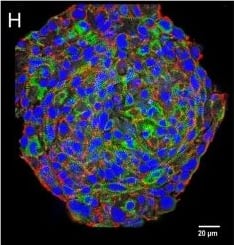

The concentration calculator allows you to quickly calculate the volume, mass or concentration of your vial. Simply enter your mass, volume, or concentration values for your reagent and the calculator will determine the rest.


![N/A uPAR [HRP]](https://images.novusbio.com/images/elisa/uPAR_DUP00_ELISA_203.jpg)
![N/A uPAR [HRP]](https://images.novusbio.com/images/elisa/DATA_uPAR_DUP00_ELISA_866.jpg)
![Western Blot Galectin-3 Antibody [Unconjugated]](https://images.novusbio.com/images/antibody/Galectin3_AF1197_Western_Blot_21471.jpg)
![Simple Western Galectin-3 Antibody [Unconjugated]](https://images.novusbio.com/images/antibody/Galectin3_AF1197_Simple_Western_18971.jpg)
![Western Blot Galectin-3 Antibody [Unconjugated]](https://images.novusbio.com/images/antibody/Galectin3_AF1197_Western_Blot_18989.jpg)
![Immunohistochemistry Dystroglycan Antibody [Unconjugated]](https://images.novusbio.com/images/antibody/Dystroglycan_AF6868_Immunohistochemistry_11019.jpg)
![Western Blot Dystroglycan Antibody [Unconjugated]](https://images.novusbio.com/images/antibody/Dystroglycan_AF6868_Western_Blot_11065.jpg)
![SEC-MALS TACE/ADAM17 [Unconjugated]](https://images.novusbio.com/images/930-adb_recombinant-human-tace-adam17-protein-cf-sec-mals-134202611180.jpg)


![Enzyme Activity u-Plasminogen Activator/Urokinase [Unconjugated]](https://images.novusbio.com/images/protein/uPlasminogen_Activator_1310SE_1837.jpg)
![Immunohistochemistry EpCAM/TROP1 Antibody [Unconjugated]](https://images.novusbio.com/images/antibody/EpCAM_AF960_Immunohistochemistry_23513.jpg)
![Simple Western EpCAM/TROP1 Antibody [Unconjugated]](https://images.novusbio.com/images/antibody/af960_human-epcam-trop1-affinity-purified-polyclonal-ab-simple-western-992021151014.jpg)
![Immunocytochemistry EpCAM/TROP1 Antibody [Unconjugated]](https://images.novusbio.com/images/af960_human-epcam-trop1-affinity-purified-polyclonal-ab-immunocytochemistry-692022125854.jpg)


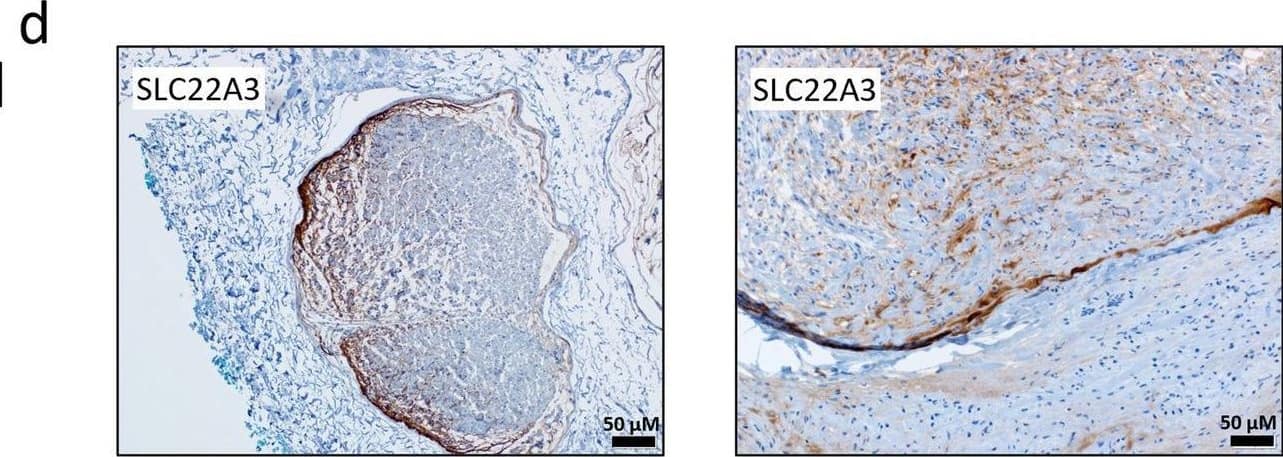

![Immunocytochemistry TSPAN8/TM4SF3 Antibody (458811) [Unconjugated]](https://images.novusbio.com/images/mab4734_human-tspan8-mab-clone-458811-immunocytochemistry-792022112521.jpg)
![Immunocytochemistry TSPAN8/TM4SF3 Antibody (458811) [Unconjugated]](https://images.novusbio.com/images/antibody/TSPAN8_MAB4734_Immunocytochemistry_9894.jpg)
![Flow Cytometry TSPAN8/TM4SF3 Antibody (458811) [Unconjugated]](https://images.novusbio.com/images/antibody/TSPAN8_MAB4734_Flow_Cytometry_8501.jpg)