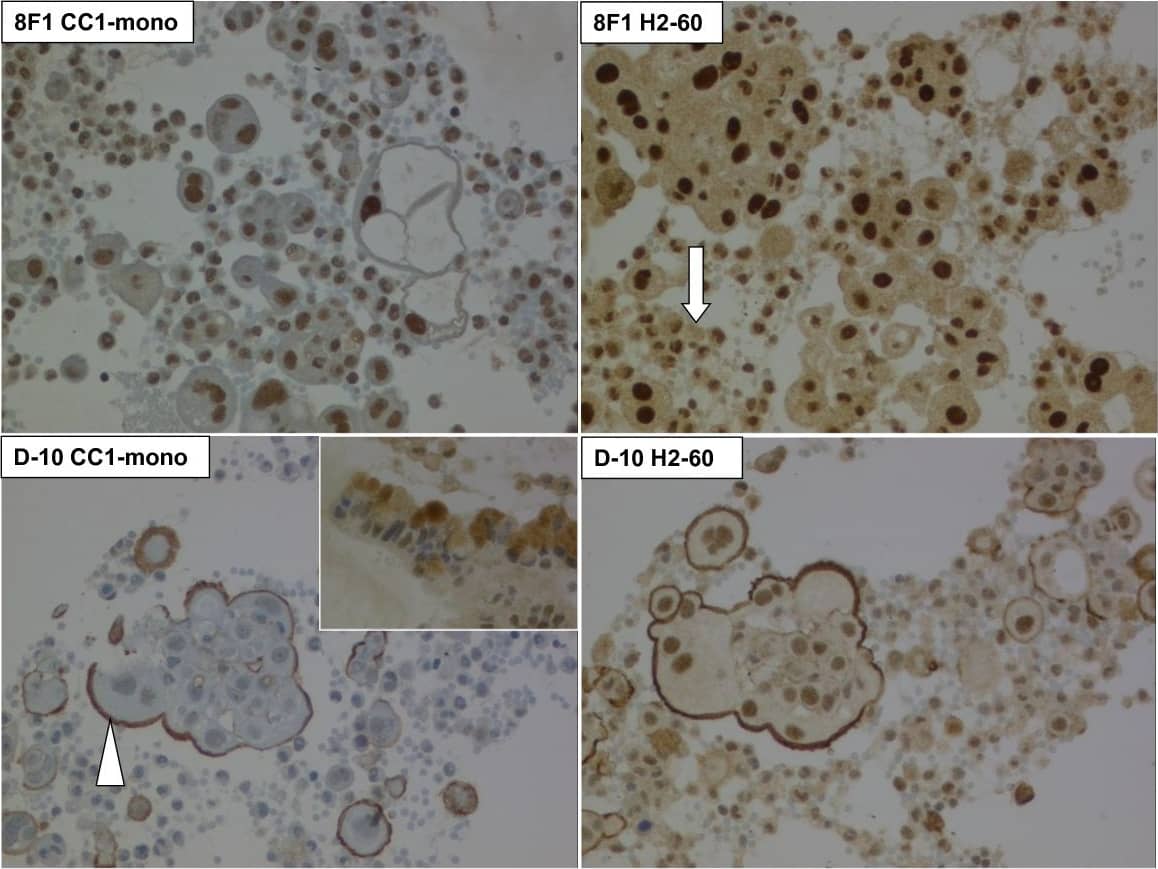
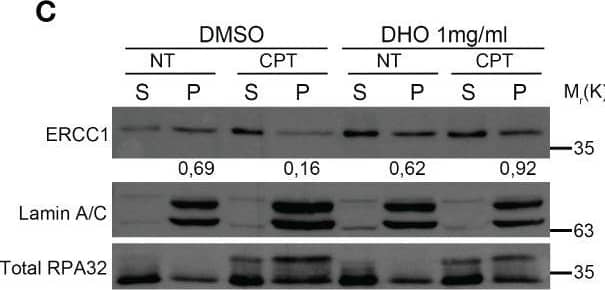
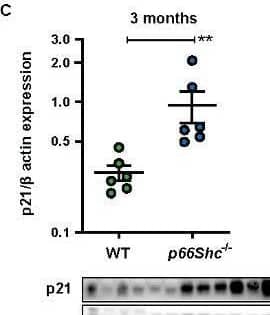
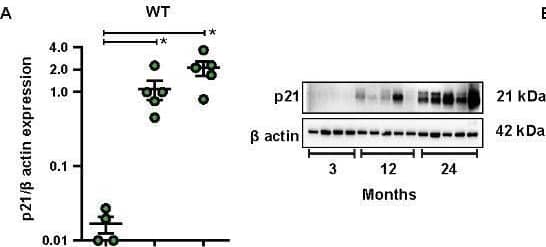
HAF017). A specific band was detected for Rad23 at approximately 52 kDa (as indicated). This experiment was conducted under reducing conditions and using Immunoblot Buffer Group 1." title="Western blot shows lysates of HeLa human cervical epithelial carcinoma cell line, Raji human Burkitt's lymphoma cell line, MCF-7 human breast cancer cell line, Nb2-11 rat lymphoma cell line, and mouse brain tissue. PVDF membrane was probed with 1 µg/mL of Goat Anti-Human/Mouse/Rat/Yeast Rad23 Antigen Affinity-purified Polyclonal Antibody (Catalog # AF4555) followed by HRP-conjugated Anti-Goat IgG Secondary Antibody (Catalog # HAF017). A specific band was detected for Rad23 at approximately 52 kDa (as indicated). This experiment was conducted under reducing conditions and using Immunoblot Buffer Group 1." />
| Reactivity | Hu, Mu, Rt, YeSpecies Glossary |
| Applications | WB |
| Clonality | Polyclonal |
| Host | Goat |
| Conjugate | Unconjugated |
| Concentration | LYOPH |
| Immunogen | E. coli-derived recombinant yeast Rad23 Accession # P32628 |
| Specificity | Detects human, mouse, rat, and yeast Rad23 protein in Western blots. |
| Source | N/A |
| Isotype | IgG |
| Clonality | Polyclonal |
| Host | Goat |
| Gene | RAD23A |
| Purity Statement | Antigen Affinity-purified |
| Innovator's Reward | Test in a species/application not listed above to receive a full credit towards a future purchase. |
| Dilutions |
|
|
| Publications |
|
| Storage | Use a manual defrost freezer and avoid repeated freeze-thaw cycles.
|
| Buffer | Lyophilized from a 0.2 μm filtered solution in PBS with Trehalose. *Small pack size (SP) is supplied either lyophilized or as a 0.2 µm filtered solution in PBS. |
| Preservative | No Preservative |
| Concentration | LYOPH |
| Reconstitution Instructions | Reconstitute at 0.2 mg/mL in sterile PBS. |
Rad23 is an evolutionarily conserved protein that is important for nucleotide excision repair. All eukaryotic Rad23 proteins contain an amino-terminal UbL domain that bears a striking resemblance to ubiquitin. Rad23 has a proteolytic function in DNA repair via its interaction with the 26S proteosome through the UbL domain. The elimination of this domain causes sensitivity to ultraviolet radiation.




| Publication using AF4555 | Applications | Species |
|---|---|---|
| Acharya, N;Daniel, E;Dao, TP;Mulvey, E;Kraut, D;Roelofs, J;Castañeda, CA; STI1 domain dynamically engages transient helices in disordered regions to drive self-association and phase separation of yeast ubiquilin Dsk2 bioRxiv : the preprint server for biology 2025-03-14 [PMID: 40161686] (Western Blot, Yeast - Saccharomyces cerevisiae) | Western Blot | Yeast - Saccharomyces cerevisiae |
Secondary Antibodies |
Isotype Controls |
The concentration calculator allows you to quickly calculate the volume, mass or concentration of your vial. Simply enter your mass, volume, or concentration values for your reagent and the calculator will determine the rest.