
| Reactivity | HuSpecies Glossary |
| Applications | IHC |
| Clonality | Polyclonal |
| Host | Sheep |
| Conjugate | Unconjugated |
| Concentration | LYOPH |
| Immunogen | E. coli-derived recombinant human LYPD1 Cys54-Ser116 Accession # Q8N2G4 |
| Specificity | Detects human LYPD1 in direct ELISAs. In direct ELISAs, less than 1% cross-reactivity with recombinant human LYPD3 is observed. |
| Source | N/A |
| Isotype | IgG |
| Clonality | Polyclonal |
| Host | Sheep |
| Gene | LYPD1 |
| Purity Statement | Antigen Affinity-purified |
| Innovator's Reward | Test in a species/application not listed above to receive a full credit towards a future purchase. |
| Storage | Use a manual defrost freezer and avoid repeated freeze-thaw cycles.
|
| Buffer | Lyophilized from a 0.2 μm filtered solution in PBS with Trehalose. *Small pack size (SP) is supplied either lyophilized or as a 0.2 µm filtered solution in PBS. |
| Preservative | No Preservative |
| Concentration | LYOPH |
| Reconstitution Instructions | Sterile PBS to a final concentration of 0.2 mg/mL. |
LYPD1 (Ly6/PLAUR-domain containing protein 1; also Lynx2 and PHTS) is a 15-20 kDa member of the Ly6 family of GPI-anchored proteins. It is expressed on postmitotic neurons in multiple locations, performing multiple functions. Two suggested functions include the ability to 1) block cell proliferation, and 2) bind to acetylcholine receptors, promoting their desensitization. Human LYPD1 preproprecursor is 141 amino acids (aa) in length. It contains a signal sequence (aa 1-20), a 97 aa mature region (aa 21-117), and a cleavable prodomain that, when cleaved, generates a GPI-linked form (aa 118-141). The mature molecule contains one Ly6 domain (aa 25-107). There are multiple potential isoform variants. One possesses an alternative start site at Met53, a second contains a 21 aa substitution for aa 1-5, a third shows a 21 aa substitution for aa 64-141, and a fourth possesses a 29 aa substitution for aa 65-141. Over aa 54-116, human and mouse LYPD1 are identical in aa sequence.
![Western Blot PTEN Antibody [Unconjugated]](https://images.novusbio.com/images/antibody/PTEN_AF847_Western_Blot_5922.jpg)
![Intracellular Staining by Flow Cytometry PTEN Antibody [Unconjugated]](https://images.novusbio.com/images/antibody/PTEN_AF847_Flow_Cytometry_8281.jpg)
![Western Blot PTEN Antibody [Unconjugated]](https://images.novusbio.com/images/af847_human-mouse-rat-pten-affinity-purified-polyclonal-ab-822024951286.jpg)
![In-situ Hybridization Fibroblast Activation Protein alpha/FAP Antibody [Unconjugated]](https://images.novusbio.com/images/antibody/af3715_human-fap-affinity-purified-polyclonal-ab-in-situ-hybridization-2352024182645..jpg)
![Western Blot Fibroblast Activation Protein alpha/FAP Antibody [Unconjugated]](https://images.novusbio.com/images/antibody/Fibroblast_Activation_Protein_alpha_AF3715_Western_Blot_11934.jpg)
![Simple Western Fibroblast Activation Protein alpha/FAP Antibody [Unconjugated]](https://images.novusbio.com/images/antibody/af3715_human-fap-affinity-purified-polyclonal-ab-simple-western-110202114645.jpg)
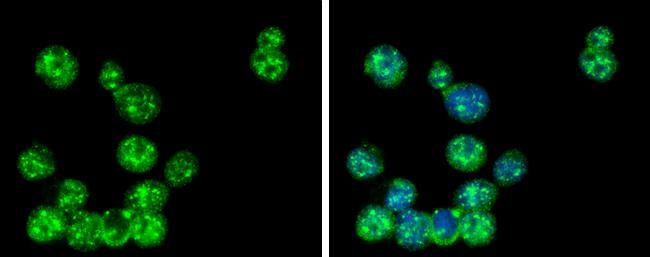


![Intracellular Staining by Flow Cytometry AKT [p Ser473] Antibody [Unconjugated] - Pan Specific](https://images.novusbio.com/images/antibody/Akt3_AF887_Flow_Cytometry_8283.jpg)
![Western Blot AKT [p Ser473] Antibody [Unconjugated] - Pan Specific](https://images.novusbio.com/images/af887_phospho-akt-s473-pan-specific-affinity-purified-pab-41202410485440.jpg)
![Western Blot AKT [p Ser473] Antibody [Unconjugated] - Pan Specific](https://images.novusbio.com/images/af887_phospho-akt-s473-pan-specific-affinity-purified-pab-8120255552843.jpg)






![LYPD1 Antibody [Unconjugated]](/sites/all/modules/enterprise-tech/et_datasheets/images/novus_guarantee.png "LYPD1 Antibody [Unconjugated]")
Secondary Antibodies |
Isotype Controls |
The concentration calculator allows you to quickly calculate the volume, mass or concentration of your vial. Simply enter your mass, volume, or concentration values for your reagent and the calculator will determine the rest.



![Western Blot Ret Antibody [Unconjugated]](https://images.novusbio.com/images/af482_mouse-ret-affinity-purified-polyclonal-ab-8120255541732.jpg)
![Western Blot Ret Antibody [Unconjugated]](https://images.novusbio.com/images/af482_mouse-ret-affinity-purified-polyclonal-ab-8120255541771.jpg)
![Western Blot Ret Antibody [Unconjugated]](https://images.novusbio.com/images/af482_mouse-ret-affinity-purified-polyclonal-ab-8120255534722.jpg)


![Immunohistochemistry TOR/mTOR [p Ser2448] Antibody - BSA Free](https://images.novusbio.com/images/nb600-607_rabbit-polyclonal-tor-mtor-p-ser2448-antibody-235202318143142.jpg)
![Western Blot TOR/mTOR [p Ser2448] Antibody - BSA Free](https://images.novusbio.com/images/nb600-607_rabbit-polyclonal-tor-mtor-p-ser2448-antibody-31020241535647.jpg)
![Data TOR/mTOR [p Ser2448] Antibody - BSA Free](https://images.novusbio.com/images/TOR-mTOR-[p-Ser2448]-Antibody-N-A-NB600-607-img0008.jpg)


