| Reactivity | HuSpecies Glossary |
| Applications | ELISA |
| Conjugate | HRP |
| Background | The Quantikine Human Apolipoprotein A-I/ApoA1 Immunoassay is a 3.5 hour solid-phase ELISA designed to measure human ApoA1 in cell culture supernates, serum, plasma, and urine. It contains E.
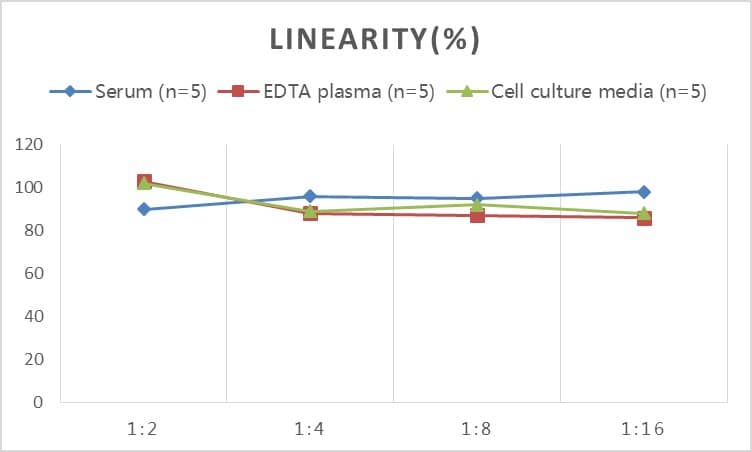
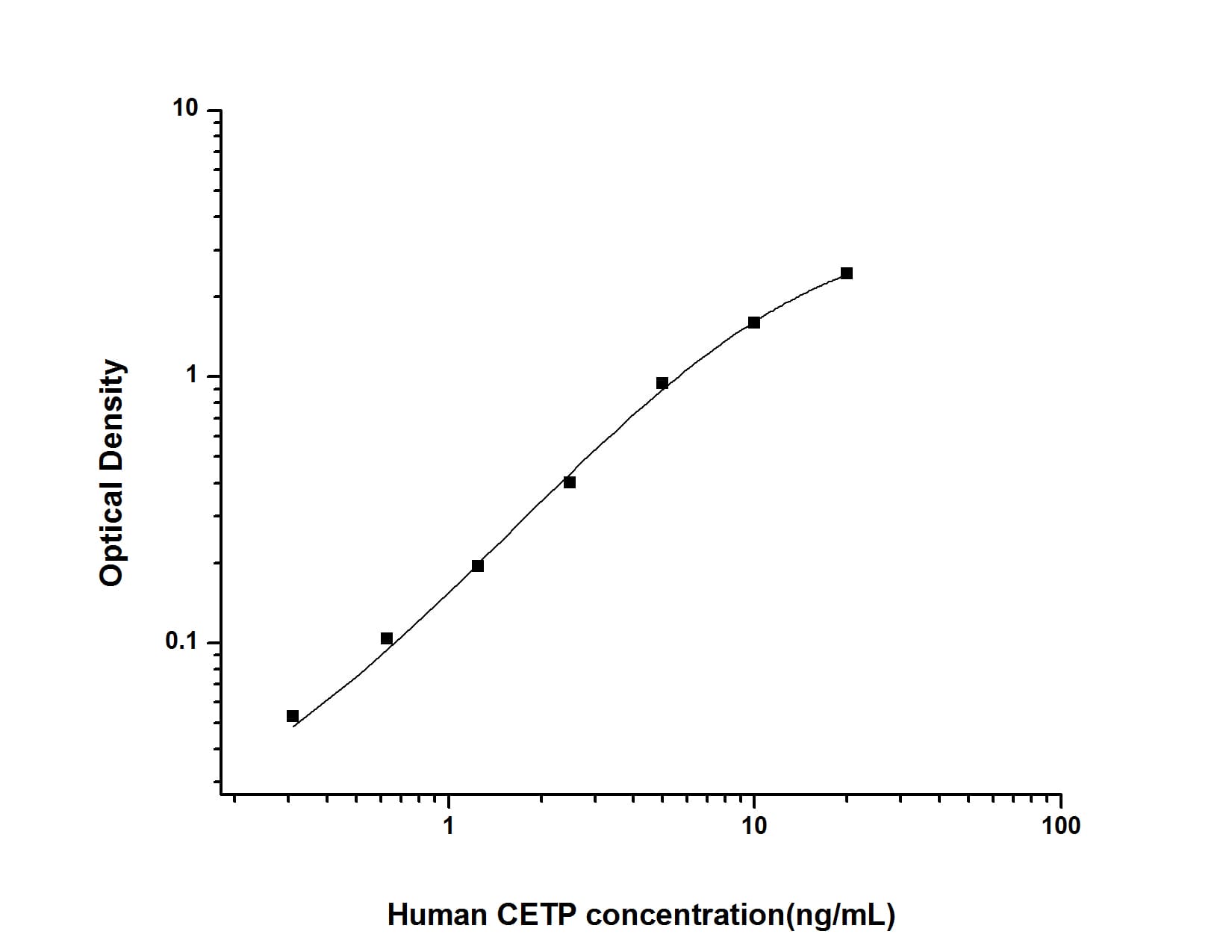
coli-expressed recombinant human ApoA1 and has been shown to accurately quantitate the recombinant factor. Results obtained using natural human ApoA1 showed linear curves that were parallel to ...the standard curves obtained using the Quantikine kit standards. These results indicate that this kit can be used to determine relative mass values for naturally occurring human ApoA1. Show More |
| Specificity | Natural and recombinant human ApoA1. |
| Source | N/A |
| Inter-Assay | See PDF Datasheet for details |
| Intra-Assay | See PDF Datasheet for details |
| Spike Recovery | See PDF Datasheet for details |
| Sample Volume | See PDF Datasheet for details |
| Gene | APOA1 |
| Dilutions |
|
|
| Application Notes | No significant interference observed with available related molecules. |
|
| Publications |
|
| Storage | Store the unopened product at 2 - 8 °C. Do not use past expiration date. |
The apolipoproteins are a structurally-unrelated group of proteins that have some association with the transport of lipids in blood. Apolipoproteins, plus phospholipids, cholesterol and triglycerides, form spherical particles with a lipid/hydrophobic center and a (apolipo)protein coat. The apolipoprotein coat promotes aqueous solubility and serves as a ligand for lipoprotein receptors. HDL may contain apolipoproteins A, C, D, E, J, L and M, while LDL contains apolipoproteins B and E.
ApoAI and ApoA2 are major protein components of serum high-density lipoprotein (HDL) and are produced by the liver and small intestine. They are involved in reverse cholesterol transport from tissues to the liver. Polymorphisms of ApoA2 are associated with disorders of cholesterol and fatty acid metabolism. Human ApoB (Apolipoprotein B-100) is a 550 kDa, secreted, palmitoylated glycoprotein that is part of LDL and VLDL particles. It is made by liver and is 4536 aa in length. It binds LDL to the ApoB/E receptor. ApoC activates lipoprotein lipase and may self-associate to form amyloid-type fibrils.
ApoE is a 34 kDa protein component of serum chylomicrons, VLDL, and HDL particles. It mediates the binding, uptake, and catabolism of these particles through interactions with the ApoE receptor and LDL receptors in the liver and brain. ApoE is important in fatty acid homeostasis and memory formation. Polymorphisms encode three variants (ApoE2, 3, 4) which are differentially related to the development of atherosclerosis and neurogenerative disorders, particularly Alzheimer's disease.
Serum amyloid A proteins (SAAs) are a family of homologous apolipoproteins of high density lipoprotein (HDL). They can be divided into two groups. The first group consists of the acute phase SAA1 and SAA2 that associate with HDL during inflammation and remodel the HDL particle by displacing apolipoprotein A1. The second group consists of constitutively expressed SAA4 and SAA5 that exist as minor apolipoproteins on HDL but make up more than 90% of the total SAA during homeostasis.


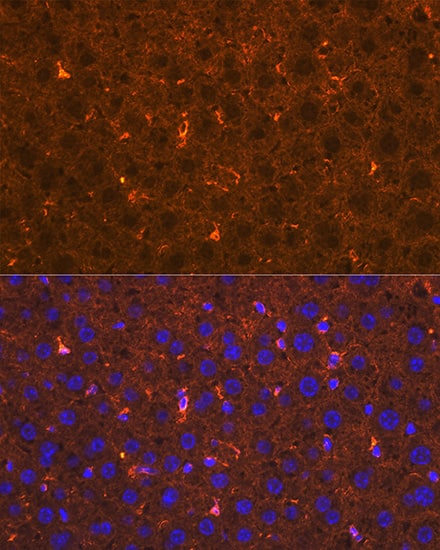


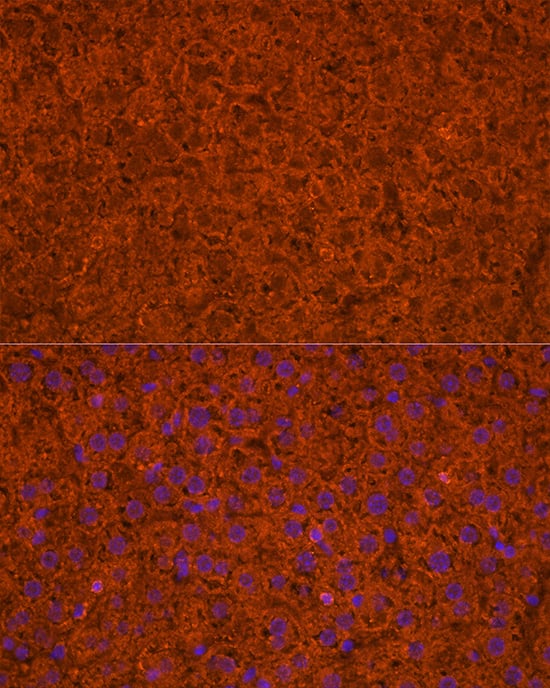
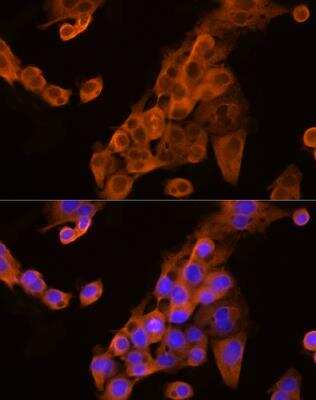
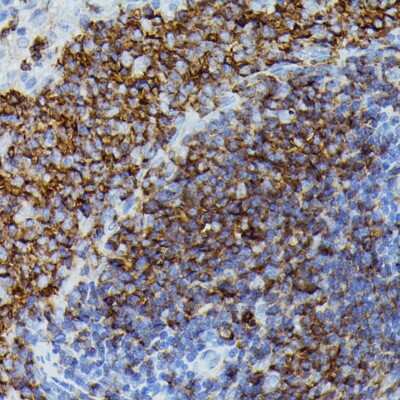


![Immunohistochemistry Albumin Antibody (188835) [Unconjugated] - Serum](https://images.novusbio.com/images/antibody/Albumin_MAB1455_Immunohistochemistry_23317.jpg)
![Immunocytochemistry Albumin Antibody (188835) [Unconjugated] - Serum](https://images.novusbio.com/images/antibody/Albumin_MAB1455_Immunocytochemistry__Immunofluorescence_17777.jpg)
![Intracellular Staining by Flow Cytometry Albumin Antibody (188835) [Unconjugated] - Serum](https://images.novusbio.com/images/antibody/Albumin_MAB1455_Flow_Cytometry_15110.jpg)


| Gene Symbol | APOA1 |


![Immunohistochemistry Insulin Antibody (182410) [Unconjugated]](https://images.novusbio.com/images/antibody/mab1417_human-bovine-mouse-insulin-mab-clone-182410-immunohistochemistry-308202115145.jpg)
![Immunocytochemistry Insulin Antibody (182410) [Unconjugated]](https://images.novusbio.com/images/antibody/Insulin_MAB1417_Immunocytochemistry_9376.jpg)

![Immunohistochemistry Lipoprotein Lipase/LPL Antibody [Unconjugated]](https://images.novusbio.com/images/antibody/Lipoprotein_Lipase_AF7197_Immunohistochemistry_21186.jpg)
![Western Blot Lipoprotein Lipase/LPL Antibody [Unconjugated]](https://images.novusbio.com/images/antibody/af7197_human-mouse-lipoprotein-lipase-lpl-affinity-purified-pab-1442025105231.jpg)
![Immunocytochemistry Lipoprotein Lipase/LPL Antibody [Unconjugated]](https://images.novusbio.com/images/antibody/Lipoprotein_Lipase_AF7197_Immunocytochemistry_11911.jpg)
![Immunocytochemistry CD55/DAF Antibody [Unconjugated]](https://images.novusbio.com/images/antibody/CD55_AF2009_Immunocytochemistry__Immunofluorescence_23052.jpg)
![Immunohistochemistry CD55/DAF Antibody [Unconjugated]](https://images.novusbio.com/images/antibody/CD55_AF2009_Immunohistochemistry_6728.jpg)