HAF007). A specific band was detected for FAK at approximately 125 kDa (as indicated). This experiment was conducted under reducing conditions and using Immunoblot Buffer Group 3." title="Western blot shows lysates of MCF-7 human breast cancer cell line, A549 human lung carcinoma cell line, Huh-7 human hepatoma cell line, and HUVEC human umbilical vein endothelial cells. PVDF membrane was probed with 2 µg/mL of Human FAK Monoclonal Antibody (Catalog # MAB4467) followed by HRP-conjugated Anti-Mouse IgG Secondary Antibody (HAF007). A specific band was detected for FAK at approximately 125 kDa (as indicated). This experiment was conducted under reducing conditions and using Immunoblot Buffer Group 3." />
| Reactivity | HuSpecies Glossary |
| Applications | WB, Simple Western, IHC, KO |
| Clone | 495919 |
| Clonality | Monoclonal |
| Host | Mouse |
| Conjugate | Unconjugated |
| Concentration | LYOPH |
| Immunogen | E. coli-derived recombinant human FAK Asp213-Thr412 Accession # Q05397 |
| Specificity | Detects human FAK in Western blots. |
| Source | N/A |
| Isotype | IgG2b |
| Clonality | Monoclonal |
| Host | Mouse |
| Gene | PTK2 |
| Purity Statement | Protein A or G purified from hybridoma culture supernatant |
| Innovator's Reward | Test in a species/application not listed above to receive a full credit towards a future purchase. |
| Dilutions |
|
|
| Publications |
|
| Storage | Use a manual defrost freezer and avoid repeated freeze-thaw cycles.
|
| Buffer | Lyophilized from a 0.2 μm filtered solution in PBS with Trehalose. *Small pack size (SP) is supplied either lyophilized or as a 0.2 µm filtered solution in PBS. |
| Preservative | No Preservative |
| Concentration | LYOPH |
| Reconstitution Instructions | Reconstitute at 0.5 mg/mL in sterile PBS. |
Focal adhesion kinase 1 (FAK), also known as FAK1 and PTK2, is a ubiquitously expressed non-receptor protein tyrosine kinase that is concentrated in focal adhesions. This cellular localization is directed by a C-terminal 125 amino acid "Focal Adhesion Targeting" (FAT) sequence. FAK plays an important role in migration, cell spreading, differentiation and apoptosis. It associates with several different signaling proteins, such as Src-family PTKs, p130Cas, Shc, Grb2, PI 3-kinase, and Paxillin. These associations enable FAK to function within a network of integrin-stimulated signaling pathways, leading to the activation of targets such as the ERK and JNK mitogen-activated protein kinase pathways. Increased expression and/or activity of FAK in various cancers has been correlated with enhanced proliferation, migration and invasiveness of human tumor cells.


![Intracellular Staining by Flow Cytometry AKT [p Ser473] Antibody [Unconjugated] - Pan Specific](https://images.novusbio.com/images/antibody/Akt3_AF887_Flow_Cytometry_8283.jpg)
![Western Blot AKT [p Ser473] Antibody [Unconjugated] - Pan Specific](https://images.novusbio.com/images/af887_phospho-akt-s473-pan-specific-affinity-purified-pab-41202410485440.jpg)
![Western Blot AKT [p Ser473] Antibody [Unconjugated] - Pan Specific](https://images.novusbio.com/images/af887_phospho-akt-s473-pan-specific-affinity-purified-pab-8120255552843.jpg)
![Western Blot EphB2 Antibody [Unconjugated]](https://images.novusbio.com/images/af467_human-mouse-ephb2-affinity-purified-polyclonal-ab-41202410485412.jpg)
![Immunohistochemistry EphB2 Antibody [Unconjugated]](https://images.novusbio.com/images/antibody/EphB2_AF467_Immunohistochemistry_20369.jpg)
![Western Blot EphB2 Antibody [Unconjugated]](https://images.novusbio.com/images/antibody/EphB2_AF467_Western_Blot_21511.jpg)
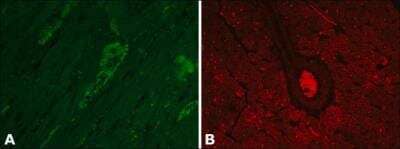
![Immunocytochemistry EGFR Antibody [Unconjugated]](https://images.novusbio.com/images/antibody/EGF_R_AF231_Immunocytochemistry__Immunofluorescence_21143.jpg)
![Flow Cytometry EGFR Antibody [Unconjugated]](https://images.novusbio.com/images/antibody/EGF_R_AF231_Flow_Cytometry_20401.jpg)
![Western Blot EGFR Antibody [Unconjugated]](https://images.novusbio.com/images/antibody/EGF_R_AF231_Western_Blot_19925.jpg)
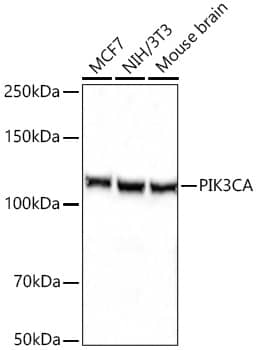
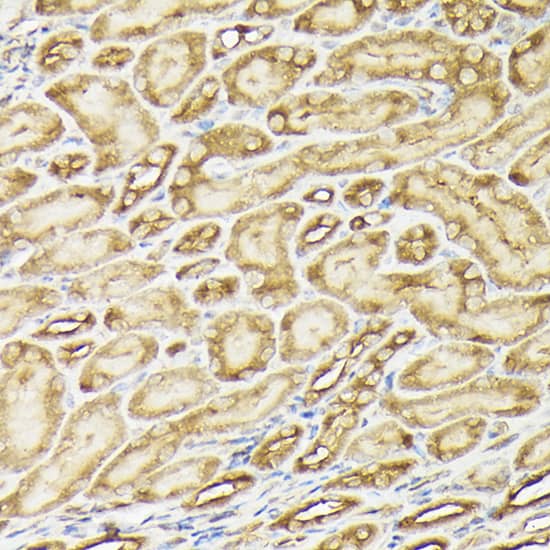
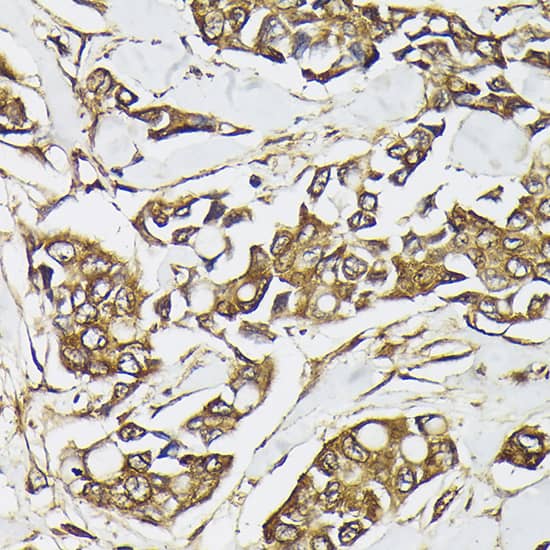


![FAK Antibody (495919) [Unconjugated]](/sites/all/modules/enterprise-tech/et_datasheets/images/novus_guarantee.png "FAK Antibody (495919) [Unconjugated]")
Secondary Antibodies |
Isotype Controls |
The concentration calculator allows you to quickly calculate the volume, mass or concentration of your vial. Simply enter your mass, volume, or concentration values for your reagent and the calculator will determine the rest.


 CTS002) and counterstained with hematoxylin (blue). View our protocol for
  HAF018). A specific band was detected for FAK at approximately 135 kDa (as indicated) in the parental HEK293T cell line, but is not detectable in knockout HEK293T cell line. GAPDH (

![Western Blot Paxillin [p Tyr118] Antibody](https://images.novusbio.com/images/Paxillin-[p-Tyr118]-Antibody-Western-Blot-NBP2-24459-img0001.jpg)
![Western Blot Src [p Tyr419] Antibody [Unconjugated]](https://images.novusbio.com/images/antibody/Src_AF2685_Western_Blot_5209.jpg)
![Immunohistochemistry Src [p Tyr419] Antibody [Unconjugated]](https://images.novusbio.com/images/af2685_human-phospho-src-y419-affinity-purified-polyclonal-ab-412024124022.jpg)
![Immunohistochemistry Src [p Tyr419] Antibody [Unconjugated]](https://images.novusbio.com/images/antibody/Src_AF2685_Immunohistochemistry_9943.jpg)
![Western Blot PYK2/FAK2 [p Tyr402] Antibody (592918) [Unconjugated]](https://images.novusbio.com/images/mab6210_human-phospho-pyk2-y402-mab-clone-592918-western-blot-1212202585785.jpg)
![Western Blot PYK2/FAK2 [p Tyr402] Antibody (592918) [Unconjugated]](https://images.novusbio.com/images/mab6210_human-phospho-pyk2-y402-mab-clone-592918-western-blot-121220259163819.jpg)
![Western Blot PYK2/FAK2 [p Tyr402] Antibody (592918) [Unconjugated]](https://images.novusbio.com/images/mab6210_human-phospho-pyk2-y402-mab-clone-592918-western-blot-1212202591401.jpg)
![Western Blot ERK2 Antibody [Unconjugated]](https://images.novusbio.com/images/antibody/ERK2_AF1230_Western_Blot_5097.jpg)
![Knockout Validated ERK2 Antibody [Unconjugated]](https://images.novusbio.com/images/antibody/ERK2_AF1230_Knockout_Validated_22864.jpg)
![Immunohistochemistry ERK2 Antibody [Unconjugated]](https://images.novusbio.com/images/antibody/ERK2_AF1230_Immunohistochemistry_20696.jpg)


![Flow Cytometry Integrin beta 1/CD29 Antibody (P5D2) [Unconjugated]](https://images.novusbio.com/images/antibody/Integrin_beta_1_MAB17781_Flow_Cytometry_17077.jpg)
![Flow Cytometry Integrin beta 1/CD29 Antibody (P5D2) [Unconjugated]](https://images.novusbio.com/images/antibody/Integrin_beta_1_MAB17781_Flow_Cytometry_23861.jpg)
![N/A VEGF [HRP]](https://images.novusbio.com/images/elisa/VEGF_DVE00_ELISA_208.jpg)
![N/A VEGF [HRP]](https://images.novusbio.com/images/elisa/DATA_VEGF_DVE00_ELISA_871.jpg)
![N/A VEGF [HRP]](https://images.novusbio.com/images/elisa/DATA_VEGF_DVE00_ELISA_872.jpg)