![Western Blot: TOMM20 Antibody (4F3) [H00009804-M01] - Analysis of TOMM20 expression in transfected 293T cell line by TOMM20 monoclonal antibody (M01), clone 4F3.Lane 1: TOMM20 transfected lysate(16.3 KDa).Lane 2: Non-transfected lysate.](http://images.novusbio.com/fullsize/TOMM20-Antibody-4F3-Western-Blot-H00009804-M01-img0016.jpg "Western Blot: TOMM20 Antibody (4F3) [H00009804-M01] - Analysis of TOMM20 expression in transfected 293T cell line by TOMM20 monoclonal antibody (M01), clone 4F3.Lane 1: TOMM20 transfected lysate(16.3 KDa).Lane 2: Non-transfected lysate.")
| Reactivity | Hu, Mu, RtSpecies Glossary |
| Applications | WB, ELISA, Flow, ICC/IF, IHC |
| Clone | 4F3 |
| Clonality | Monoclonal |
| Host | Mouse |
| Conjugate | Unconjugated |
| Format | Azide and BSA Free |
| Immunogen | TOMM20 (AAH66335, 1 a.a. ~ 145 a.a) full-length recombinant protein with GST tag. MW of the GST tag alone is 26 KDa. MVGRNSAIAAGVCGALFIGYCIYFDRKRRSDPNFKNRLRERRKKQKLAKERAGLSKLPDLKDAEAVQKFFLEEIQLGEELLAQGEYEKGVDHLTNAIAVCGQPQQLLQVLQQTLPPPVFQMLLTKLPTISQRIVSAQSLAEDDVE |
| Localization | Mitochondrion outer membrane; Multi-pass membrane protein |
| Specificity | TOMM20 - translocase of outer mitochondrial membrane 20 homolog (yeast) |
| Isotype | IgG1 Kappa |
| Clonality | Monoclonal |
| Host | Mouse |
| Gene | TOMM20 |
| Purity | IgG purified |
| Innovator's Reward | Test in a species/application not listed above to receive a full credit towards a future purchase. |
| Dilutions |
|
|
| Application Notes | Use in FLOW cytometry reported in scientific literature ( PMID 26779811). |
|
| Publications |
|
| Storage | Aliquot and store at -20C or -80C. Avoid freeze-thaw cycles. |
| Buffer | In 1x PBS, pH 7.4 |
| Preservative | No Preservative |
| Purity | IgG purified |




Secondary Antibodies |
Isotype Controls |
Research Areas for TOMM20 Antibody (H00009804-M01)Find related products by research area.
|
|
Parkin - Role in Mitochondrial Quality Control and Parkinson's Disease Parkin/PARK2 is a cytosolic enzyme which gets recruited to cellular mitochondria damaged through depolarization, ROS or unfolded proteins accumulation, and exert protective effects by inducing mitophagy (mitochondrial autophagy). Parkin induces mit... Read full blog post. |
The concentration calculator allows you to quickly calculate the volume, mass or concentration of your vial. Simply enter your mass, volume, or concentration values for your reagent and the calculator will determine the rest.


![Immunocytochemistry/Immunofluorescence: TOMM20 Antibody (4F3) [H00009804-M01] - Analysis of monoclonal antibody to TOMM20 on HeLa cell. Antibody concentration 10 ug/ml.](http://images.novusbio.com/fullsize/TOMM20-Antibody-4F3-Immunocytochemistry-Immunofluorescence-H00009804-M01-img0009.jpg "Immunocytochemistry/Immunofluorescence: TOMM20 Antibody (4F3) [H00009804-M01] - Analysis of monoclonal antibody to TOMM20 on HeLa cell. Antibody concentration 10 ug/ml.")

![Western Blot: TOMM20 Antibody (4F3) [H00009804-M01] - TOMM20 monoclonal antibody (M01), clone 4F3 Analysis of TOMM20 expression in HeLa.](http://images.novusbio.com/fullsize/TOMM20-Antibody-4F3-Western-Blot-H00009804-M01-img0013.jpg "Western Blot: TOMM20 Antibody (4F3) [H00009804-M01] - TOMM20 monoclonal antibody (M01), clone 4F3 Analysis of TOMM20 expression in HeLa.")
![Western Blot: TOMM20 Antibody (4F3) [H00009804-M01] - TOMM20 monoclonal antibody (M01), clone 4F3. Analysis of TOMM20 expression in PC-12.](http://images.novusbio.com/fullsize/TOMM20-Antibody-4F3-Western-Blot-H00009804-M01-img0014.jpg "Western Blot: TOMM20 Antibody (4F3) [H00009804-M01] - TOMM20 monoclonal antibody (M01), clone 4F3. Analysis of TOMM20 expression in PC-12.")
![Western Blot: TOMM20 Antibody (4F3) [H00009804-M01] - TOMM20 monoclonal antibody (M01), clone 4F3. Analysis of TOMM20 expression in NIH/3T3.](http://images.novusbio.com/fullsize/TOMM20-Antibody-4F3-Western-Blot-H00009804-M01-img0015.jpg "Western Blot: TOMM20 Antibody (4F3) [H00009804-M01] - TOMM20 monoclonal antibody (M01), clone 4F3. Analysis of TOMM20 expression in NIH/3T3.")
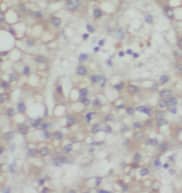
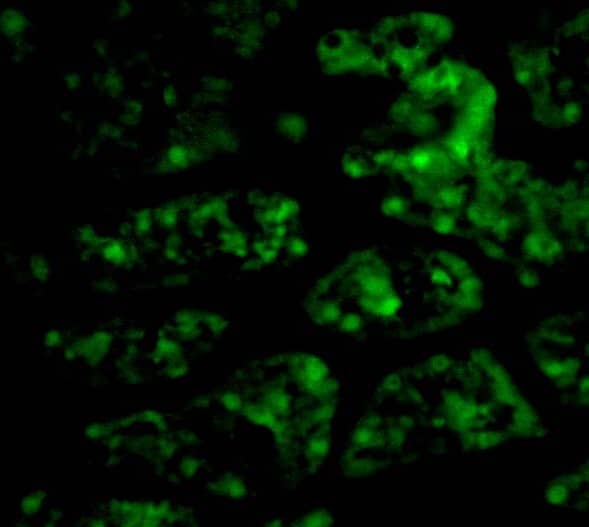
![Immunohistochemistry-Paraffin: TOMM20 Antibody (4F3) [H00009804-M01] - Analysis of monoclonal antibody to TOMM20 on formalin-fixed paraffin-embedded human small Intestine. Antibody concentration 3 ug/ml.](http://images.novusbio.com/fullsize/TOMM20-Antibody-4F3-Immunohistochemistry-Paraffin-H00009804-M01-img0011.jpg "Immunohistochemistry-Paraffin: TOMM20 Antibody (4F3) [H00009804-M01] - Analysis of monoclonal antibody to TOMM20 on formalin-fixed paraffin-embedded human small Intestine. Antibody concentration 3 ug/ml.")
![ELISA: TOMM20 Antibody (4F3) [H00009804-M01] - Detection limit for recombinant GST tagged TOMM20 is approximately 0.1ng/ml as a capture antibody.](http://images.novusbio.com/fullsize/TOMM20-Antibody-4F3-ELISA-H00009804-M01-img0017.jpg "ELISA: TOMM20 Antibody (4F3) [H00009804-M01] - Detection limit for recombinant GST tagged TOMM20 is approximately 0.1ng/ml as a capture antibody.")
![Immunocytochemistry/ Immunofluorescence: TOMM20 Antibody (4F3) [H00009804-M01] - Upregulation of GAPDH & Tom20 in C6 gliomas. a A section of rat brain stained with hematoxilin & eosin to show a glioma produced by implantation of C6 cells in the right caudate nucleus. In this case, cells also grew in the region of the syringe needle track through the cortex. (b–d). A small glioma labeled by bisbenzamide (b) & with antibodies against Tom20 (c) & GAPDH (d). The brightness & contrast have been increased. e Illustration of a strip perpendicular to the rim of a glioma (labeled with bisbenzamide) & along which intensity profiles were measured. f, g Tom20 & GAPDH fluorescence along such a strip (barely visible without enhancement). The graphs show the raw intensity values given by ImageJ. Image collected & cropped by CiteAb from the following publication (//pubmed.ncbi.nlm.nih.gov/26032618), licensed under a CC-BY license. Not internally tested by Novus Biologicals.](http://images.novusbio.com/fullsize/h00009804-m01_mouse-monoclonal-tomm20-antibody-4f3-310202415175285.jpg "Immunocytochemistry/ Immunofluorescence: TOMM20 Antibody (4F3) [H00009804-M01] - Upregulation of GAPDH & Tom20 in C6 gliomas. a A section of rat brain stained with hematoxilin & eosin to show a glioma produced by implantation of C6 cells in the right caudate nucleus. In this case, cells also grew in the region of the syringe needle track through the cortex. (b–d). A small glioma labeled by bisbenzamide (b) & with antibodies against Tom20 (c) & GAPDH (d). The brightness & contrast have been increased. e Illustration of a strip perpendicular to the rim of a glioma (labeled with bisbenzamide) & along which intensity profiles were measured. f, g Tom20 & GAPDH fluorescence along such a strip (barely visible without enhancement). The graphs show the raw intensity values given by ImageJ. Image collected & cropped by CiteAb from the following publication (//pubmed.ncbi.nlm.nih.gov/26032618), licensed under a CC-BY license. Not internally tested by Novus Biologicals.")







![Flow Cytometry: Mouse IgG1 Kappa Isotype Control (P3.6.2.8.1) [NBP1-43319] - Analysis of Alexa Fluor (R) 647 conjugate of NBP1-43319. Mouse IgG1 isotype control was used as a negative control. Flow cytometry image submitted by a verified customer review.](https://images.novusbio.com/images/Mouse-IgG1-Kappa-Light-Chain-Isotype-Control-P3-6-2-8-1-Flow-Cytometry-NBP1-43319-img0001.jpg "Flow Cytometry: Mouse IgG1 Kappa Isotype Control (P3.6.2.8.1) [NBP1-43319] - Analysis of Alexa Fluor (R) 647 conjugate of NBP1-43319. Mouse IgG1 isotype control was used as a negative control. Flow cytometry image submitted by a verified customer review.")