After August 17, 2026, Novus Biologicals products and services will no longer be available on this website; you will access all products and services on rndsystems.com. Create your R&D Systems online account today.
This product is produced by and distributed for Abnova, a company based in Taiwan.
Alternate Names for Human SAA ELISA Kit (Colorimetric)
SAA
SAA1
SAA4
serum amyloid A1 cluster
Background
The serum amyloid A (SAA) family comprises a number of differentially expressed apolipoproteins, acute-phase SAA1 and SAA2, the former being the major component in plasma, and constitutive SAAs (C-SAAs). Although the liver is the primary site of synthesis of both SAA types extrahepatic production has been reported. The in vivo concentrations increase by as much as 1000-fold during inflammation. Several studies have stressed its importance in the diagnosis and monitoring of various diseases. Pathological SAA values are often detected in association with normal CRP concentrations; SAA rises earlier and more sharply than CRP. Recently, a broader view of SAA expression and function has been emerging. Expression studies show production of SAA proteins in histologically normal, atherosclerotic, Alzheimer, inflammatory, and tumor tissues. SAA has been found to have binding sites for high density lipoproteins, calcium, laminin, and heparin/heparan-sulfate. Also adhesion motifs were identified and new functions, affecting cell adhesion, migration, proliferation and aggregation discovered. These findings emphasize the importance of SAA in various physiological and pathological processes, including inflammation, atherosclerosis, thrombosis, AA-amyloidosis, rheumatoid arthritis, and neoplasia. SAA has also a number of immunomodulatory roles, it can induce chemotaxis and adhesion molecule expression, has cytokine-like properties and can promote the upregulation of metalloproteinases. It enhances the binding of high-density lipoprotein to macrophages and thus helps in the delivery of lipids to sites of injury for use in tissue repair. It is thus thought to be an integral part of the disease processes. In addition, recent experiments suggest that SAA may play a "housekeeping" role in normal human tissues. Elevated levels of SAA over time predispose to secondary amyloidosis, extracellular accumulation of amyloid fibrils, derived from a circulating precursor, in various tissue and organs. The most common form of amyloidosis occurs secondary to chronic inflammatory disease, particularly rheumatoid arthritis. The antibody is raised against human SAA and Helix Pomatia Haemocyanine. It reacts specifically with SAA-1, the major isoform of SAA in plasma.
Limitations
This product is for research use only and is not approved for use in humans or in clinical diagnosis. ELISA Kits are guaranteed for 6 months from date of receipt.
FAQs for SAA ELISA Kit (KA0518). (Showing 1 - 1 of 1 FAQs).
What is the difference between the Quantikine and Duoset ELISA kits?
Our Quantikine kits are fully optimized and validated for the sample types listed on the product specific webpage and datasheet, as this can vary between kits. Each kit is supplied ready to use with one pre-coated 96-well plate, a detection antibody directly conjugated to HRP, and all other necessary reagents. These kits are ideal for researchers who want the convenience of a ready to use and optimized ELISA product. Some of these kits are also available prepackaged in larger 6 and 50 plate sizes.Our DuoSet Kits, in contrast, are ELISA development kits containing the capture and detection antibody, the mass-value calibrated standard, and streptavidin-HRP to prepare approximately 5 or 15 plates. Ancillary reagents will need to be used/purchased, and for most kits, we will recommend one of our Ancillary Reagent Kits, which contain the reagents we use ourselves in-house. DuoSet kits are validated only for cell culture supernatant samples and therefore require further development and validation for accurate measurement in more complex samples such as serum and plasma. Our DuoSet Kits offer an economical, flexible alternative for the experienced ELISA user.
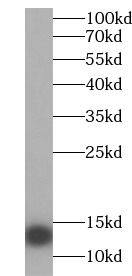
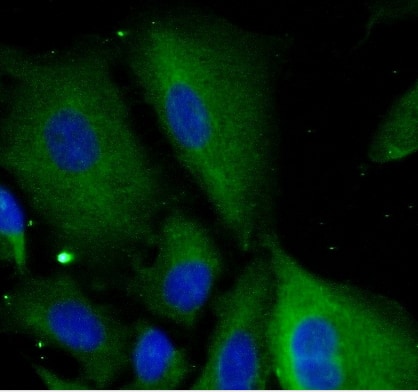
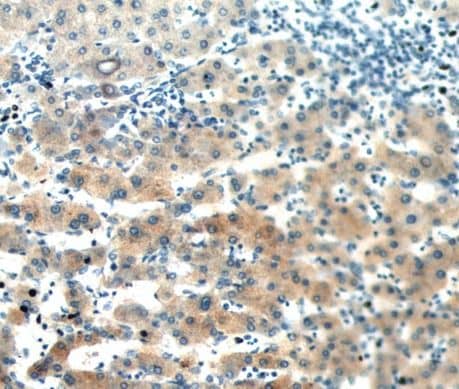
![Western Blot Syntaxin 1A Antibody [Unconjugated]](https://images.novusbio.com/images/antibody/Syntaxin_1A_AF7237_Western_Blot_11746.jpg)
![Immunocytochemistry Syntaxin 1A Antibody [Unconjugated]](https://images.novusbio.com/images/antibody/Syntaxin_1A_AF7237_Immunocytochemistry_13004.jpg)


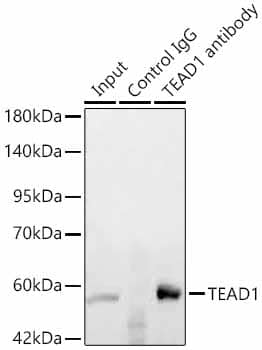





![ELISA: SAA ELISA Kit [HRP] [KA0518] - Standard curve](http://images.novusbio.com/fullsize/SAA-ELISA-Kit-[HRP]-ELISA-KA0518-img0001.jpg "ELISA: SAA ELISA Kit [HRP] [KA0518] - Standard curve")
![Western Blot Serum Amyloid A1/A2 Antibody [Unconjugated]](https://images.novusbio.com/images/antibody/Serum_Amyloid_A1_A2_AF2948_Western_Blot_20878.jpg)
![Immunohistochemistry Serum Amyloid A1/A2 Antibody [Unconjugated]](https://images.novusbio.com/images/antibody/Serum_Amyloid_A1_AF2948_Immunohistochemistry_10686.jpg)
![Western Blot Serum Amyloid A1/A2 Antibody [Unconjugated]](https://images.novusbio.com/images/af2948_mouse-serum-amyloid-a1-a2-affinity-purified-polyclonal-ab-8120255534730.jpg)
![N/A IL-6 [HRP]](https://images.novusbio.com/images/elisa/DATA_IL6_M6000_ELISA_936.jpg)
![N/A IL-6 [HRP]](https://images.novusbio.com/images/elisa/IL-6_M6000_ELISA_415.jpg)
![N/A IL-6 [HRP]](https://images.novusbio.com/images/m6000b_mouse-il-6-quantikine-elisa-kit-1752025024034.jpg)
![SDS-Page TNF-alpha [Unconjugated]](https://images.novusbio.com/images/protein/TNF-alpha_210-TA_256.jpg)
![Bioactivity TNF-alpha [Unconjugated]](https://images.novusbio.com/images/protein/TNFalpha_210TA_1658.jpg)
![SEC-MALS TNF-alpha [Unconjugated]](https://images.novusbio.com/images/210-ta_recombinant-human-tnf-alpha-protein-sec-mals-35202312244..jpg)

![Immunohistochemistry Complement Factor H Antibody [Unconjugated]](https://images.novusbio.com/images/antibody/Complement_Factor_H_AF4779_Immunohistochemistry_7182.jpg)
![Bioactivity IL-1 beta/IL-1F2 [Unconjugated]](https://images.novusbio.com/images/protein/IL-1_beta_201-LB_306.jpg)
![SDS-Page IL-1 beta/IL-1F2 [Unconjugated]](https://images.novusbio.com/images/protein/IL-1_beta_201-LB_304.jpg)
![SEC-MALS IL-1 beta/IL-1F2 [Unconjugated]](https://images.novusbio.com/images/201-lb_recombinant-human-il-1-beta-il-1f2-protein-sec-mals-123202491556.jpg)
![N/A C-Reactive Protein/CRP [Biotin]](https://images.novusbio.com/images/elisa/DATA_CReactive_Protein_DY1707_ELISA_1701.jpg)


