| Reactivity | HuSpecies Glossary |
| Applications | Enzyme Activity |
| Format | Carrier-Free |
| Additional Information | Will be discontinued when existing inventory is gone. |
| Details of Functionality | Reaction conditions will need to be optimized for each specific application. We recommend an initial Recombinant Human UCH-L3 concentration of 0.05-5 nM. Pre-incubation for 15 minutes with 10 mM DTT is recommended to achieve maximum activity. |
| Source | E. coli-derived human UCH-L3 protein Met1 - Ala230 |
| Accession # | |
| Protein/Peptide Type | Recombinant Enzymes |
| Gene | UCHL3 |
| Purity | >95%, by SDS-PAGE under reducing conditions and visualized by Colloidal Coomassie® Blue stain |
| Dilutions |
|
|
| Theoretical MW | 26 kDa. Disclaimer note: The observed molecular weight of the protein may vary from the listed predicted molecular weight due to post translational modifications, post translation cleavages, relative charges, and other experimental factors. |
|
| Publications |
|
| Storage | Use a manual defrost freezer and avoid repeated freeze-thaw cycles.
|
| Buffer | Supplied as a solution in HEPES, NaCl and TCEP. |
| Purity | >95%, by SDS-PAGE under reducing conditions and visualized by Colloidal Coomassie® Blue stain |
Ubiquitin Carboxyl-terminal Esterase L3 (UCH-L3) is a member of the peptidase C12 family of deubiquitinating enzymes. It is widely expressed with the highest levels being observed in heart, testis, thymus and striated muscle (1,2). UCH-L3 is 230 amino acids (aa) in length with a predicted molecular weight of 26.2 kDa (3). It is composed of a single N-terminal UCH domain with a short active-site crossover loop allowing UCH-L3 to process small Ubiquitin derivatives (4,5). Human UCH-L3 shares 98% aa sequence identity with the mouse and rat orthologs. UCH-L3 releases monomeric Ubiquitin from Ubiquitin-protein conjugates (4). Additionally, it cleaves a GGLRQ peptide from the C-terminus of the Ubiquitin-like protein NEDD8, allowing NEDD8 to be conjugated to target proteins (2). UCH-L3 activity is muted in the presence of Ubiquitin dimers (6). UCH-L3 is suggested to function in the central nervous system. In particular, it is involved in the maintenance of neurons of the gracile tract, nucleus tractus solitaris, and area postrema, and in working memory (7,8). UCH-L3 has also been shown to modulate germ cell apoptosis and promote insulin signaling and adipogenesis (9,10). Additionally, UCH-L3 expression has been shown to be correlated with cancer (11-13).


![Immunohistochemistry EN-RAGE/S100A12 Antibody [Unconjugated]](https://images.novusbio.com/images/antibody/EN-RAGE_AF1052_Immunohistochemistry_6671.jpg)
![Simple Western EN-RAGE/S100A12 Antibody [Unconjugated]](https://images.novusbio.com/images/antibody/af1052_human-en-rage-affinity-purified-polyclonal-ab-simple-western-2672021152820.jpg)
![Flow Cytometry EN-RAGE/S100A12 Antibody [Unconjugated]](https://images.novusbio.com/images/antibody/af1052_human-en-rage-affinity-purified-polyclonal-ab-flow-cytometry-572024104928.jpg)


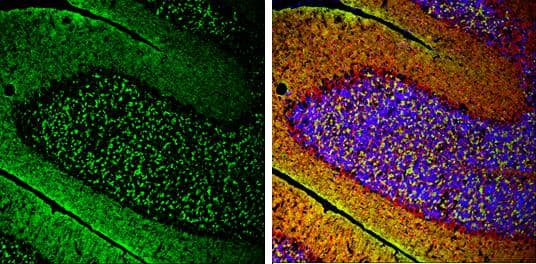


![Immunohistochemistry AMSH/STAMBP Antibody [Unconjugated]](https://images.novusbio.com/images/antibody/AMSH_AF5650_Immunohistochemistry_19609.jpg)
![Western Blot AMSH/STAMBP Antibody [Unconjugated]](https://images.novusbio.com/images/antibody/AMSH_AF5650_Western_Blot_5795.jpg)


The concentration calculator allows you to quickly calculate the volume, mass or concentration of your vial. Simply enter your mass, volume, or concentration values for your reagent and the calculator will determine the rest.



![Immunohistochemistry TFF2 Antibody (366508) [Unconjugated]](https://images.novusbio.com/images/antibody/TFF2_MAB4077_Immunohistochemistry_21485.jpg)


