 11816-TP) with an ED50 of 15.00-150.0 ng/mL." title="Measured by its binding ability in a functional ELISA. Recombinant Human MDM2/HDM2 GST-tag Protein (Catalog # 11802-DM) binds to Recombinant Human p53 His-tag (11816-TP) with an ED50 of 15.00-150.0 ng/mL." />
| Reactivity | HuSpecies Glossary |
| Applications | Bioactivity |
| Format | Carrier-Free |
| Details of Functionality | Measured by its binding ability in a functional ELISA. Recombinant Human MDM2/HDM2 GST-tag binds to Recombinant Human p53 His-tag (Catalog #
11816-TP) with an ED50 of 15.00‑150.0 ng/mL. |
||||||
| Source | E. coli-derived human MDM2/HDM2 protein
|
||||||
| N-terminal Sequence | Met1, Ser2, and Pro3 of GST tag |
||||||
| Protein/Peptide Type | Recombinant Proteins |
||||||
| Purity | >80%, by SDS-PAGE visualized with Silver Staining and quantitative densitometry by Coomassie® Blue Staining |
| Dilutions |
|
| Theoretical MW | 82 kDa. Disclaimer note: The observed molecular weight of the protein may vary from the listed predicted molecular weight due to post translational modifications, post translation cleavages, relative charges, and other experimental factors. |
| SDS-PAGE | 105-120 kDa, under reducing conditions. |
| Storage | Use a manual defrost freezer and avoid repeated freeze-thaw cycles.
|
| Buffer | Supplied as a 0.2 μm filtered solution in Tris, NaCl, Glycerol and TCEP with Trehalose. |
| Purity | >80%, by SDS-PAGE visualized with Silver Staining and quantitative densitometry by Coomassie® Blue Staining |
| Reconstitution Instructions |




![Immunohistochemistry PAK3 Antibody [Unconjugated]](https://images.novusbio.com/images/antibody/PAK3_AF6897_Immunohistochemistry_11144.jpg)
![Simple Western PAK3 Antibody [Unconjugated]](https://images.novusbio.com/images/antibody/af6897_human-mouse-pak3-affinity-purified-polyclonal-ab-simple-western-245202494437..jpg)
![Immunohistochemistry PAK3 Antibody [Unconjugated]](https://images.novusbio.com/images/antibody/PAK3_AF6897_Immunohistochemistry_11480.jpg)


![Intracellular Staining by Flow Cytometry AKT [p Ser473] Antibody [Unconjugated] - Pan Specific](https://images.novusbio.com/images/antibody/Akt3_AF887_Flow_Cytometry_8283.jpg)
![Western Blot AKT [p Ser473] Antibody [Unconjugated] - Pan Specific](https://images.novusbio.com/images/af887_phospho-akt-s473-pan-specific-affinity-purified-pab-41202410485440.jpg)
![Western Blot AKT [p Ser473] Antibody [Unconjugated] - Pan Specific](https://images.novusbio.com/images/af887_phospho-akt-s473-pan-specific-affinity-purified-pab-8120255552843.jpg)
![Immunocytochemistry EGFR Antibody [Unconjugated]](https://images.novusbio.com/images/antibody/EGF_R_AF231_Immunocytochemistry__Immunofluorescence_21143.jpg)
![Flow Cytometry EGFR Antibody [Unconjugated]](https://images.novusbio.com/images/antibody/EGF_R_AF231_Flow_Cytometry_20401.jpg)
![Western Blot EGFR Antibody [Unconjugated]](https://images.novusbio.com/images/antibody/EGF_R_AF231_Western_Blot_19925.jpg)


The concentration calculator allows you to quickly calculate the volume, mass or concentration of your vial. Simply enter your mass, volume, or concentration values for your reagent and the calculator will determine the rest.


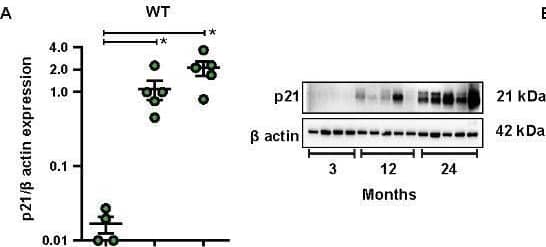
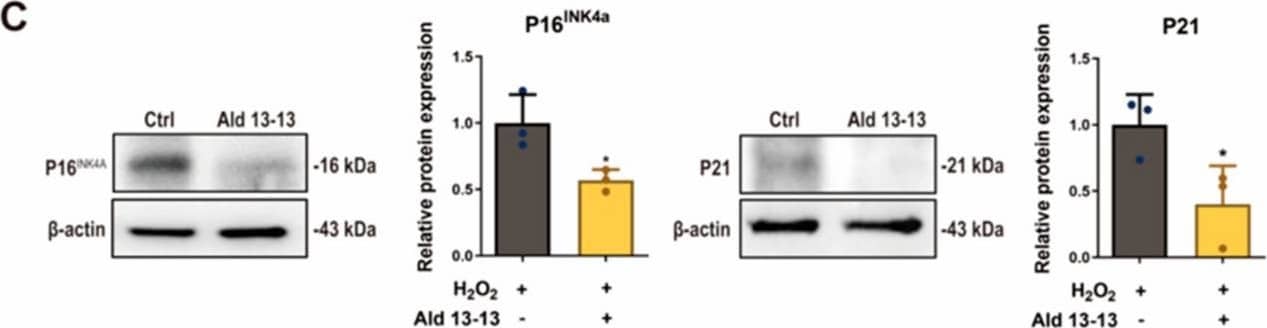


![Western Blot RB1 Antibody (607121) [Unconjugated]](https://images.novusbio.com/images/mab6495_human-rb1-mab-clone-607121-812025548577.jpg)
![Simple Western RB1 Antibody (607121) [Unconjugated]](https://images.novusbio.com/images/antibody/RB1_MAB6495_Simple_Western_16629.jpg)
![Western Blot RB1 Antibody (607121) [Unconjugated]](https://images.novusbio.com/images/antibody/RB1_MAB6495_Western_Blot_10216.jpg)


![Immunohistochemistry-Paraffin: MDM2/HDM2 Antibody (SMP14) [NB100-2736] - Analysis of tissue section of human breast cancer xenograft using MDM2/HDM2 antibody (clone SMP14) at 1:100 dilution. Several of the cancer cells developed a strong nuclear with weak cytoplasmic immunostaining of MDM2.](https://images.novusbio.com/images/MDM2-HDM2-Antibody-SMP14-Immunohistochemistry-Paraffin-NB100-2736-img0002.jpg "Immunohistochemistry-Paraffin: MDM2/HDM2 Antibody (SMP14) [NB100-2736] - Analysis of tissue section of human breast cancer xenograft using MDM2/HDM2 antibody (clone SMP14) at 1:100 dilution. Several of the cancer cells developed a strong nuclear with weak cytoplasmic immunostaining of MDM2.")
