| Reactivity | HuSpecies Glossary |
| Applications | Bioactivity |
| Format | Carrier-Free |
| Details of Functionality | Bioassay data are not available. |
||||||
| Source | Mouse myeloma cell line, NS0-derived human RELT/TNFRSF19L protein
|
||||||
| Accession # | |||||||
| N-terminal Sequence | Ser26 |
||||||
| Structure / Form | Disulfide-linked homodimer |
||||||
| Protein/Peptide Type | Recombinant Proteins |
||||||
| Gene | RELT |
||||||
| Purity | >90%, by SDS-PAGE under reducing conditions and visualized by silver stain |
||||||
| Endotoxin Note | <1.0 EU per 1 μg of the protein by the LAL method. |
| Dilutions |
|
| Theoretical MW | 41 kDa (monomer). Disclaimer note: The observed molecular weight of the protein may vary from the listed predicted molecular weight due to post translational modifications, post translation cleavages, relative charges, and other experimental factors. |
| SDS-PAGE | 55-58 kDa, reducing conditions |
| Storage | Use a manual defrost freezer and avoid repeated freeze-thaw cycles.
|
| Buffer | Supplied as a 0.2 μm filtered solution in PBS. |
| Purity | >90%, by SDS-PAGE under reducing conditions and visualized by silver stain |
RELT (Receptor Expressed in Lymphoid Tissues) is a 46 kDa (predicted) type I transmembrane glycoprotein belonging to the tumor necrosis factor receptor superfamily, designated TNFRSF19-like (TNFRSF19L) (1, 2). It is primarily expressed in hematopoietic tissues and peripheral blood leukocytes (2, 3). Human RELT cDNA encodes 430 amino acids (aa), including a 25 aa signal peptide, a 137 aa extracellular domain containing a TNF receptor cysteine-rich domain and a potential N‑linked glycosylation site, a 21 aa transmembrane domain and a 247 aa cytoplasmic region that lacks a death domain. Within the ECD, human RELT shares 78%, 75%, 75%, 78% and 72% aa sequence homology with mouse, rat, canine, porcine and bovine RELT, respectively. Among TNFRSF members, the RELT extracellular domain is most closely related to that of TROY/TNFRSF19 and OX40 (2). Neither human nor mouse RELT bind any of the ~19 TNF superfamily ligands that have been tested (1). Two related transmembrane proteins, RELL1 and RELL2, have been identified in both human and mouse (3). RELL1 and 2 can interact with and are coexpressed with RELT, and are thought to modulate its signaling (3-5). Intracellularly, RELT has been shown to bind the adaptor protein TRAF-1 and activate the NF‑ kappa B pathway, the phospholipid scramblase PLSCR1, and oxidative stress responsive proteins OSR1 (2-5). Another investigator notes association and signaling through SPAK, but not TRAF or NF kappa B (6). When overexpressed in HEK-293 cells, RELT induces p38 and JNK signaling and activates apoptosis (4-6). Immobilized RELT can also costimulate T-cell proliferation in the presence of CD3 signaling (2).


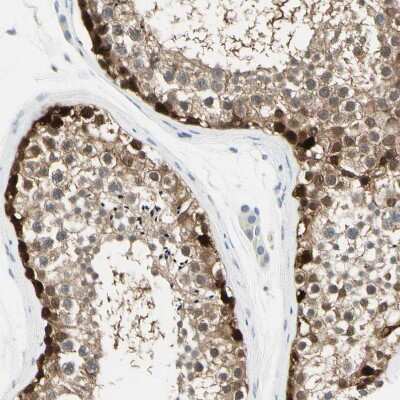
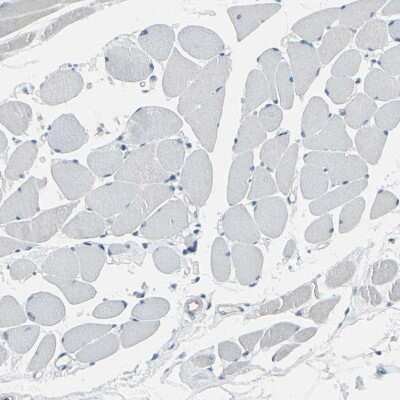


The concentration calculator allows you to quickly calculate the volume, mass or concentration of your vial. Simply enter your mass, volume, or concentration values for your reagent and the calculator will determine the rest.


![SDS-Page TNF-alpha [Unconjugated]](https://images.novusbio.com/images/protein/TNF-alpha_210-TA_256.jpg)
![Bioactivity TNF-alpha [Unconjugated]](https://images.novusbio.com/images/protein/TNFalpha_210TA_1658.jpg)
![SEC-MALS TNF-alpha [Unconjugated]](https://images.novusbio.com/images/210-ta_recombinant-human-tnf-alpha-protein-sec-mals-35202312244..jpg)


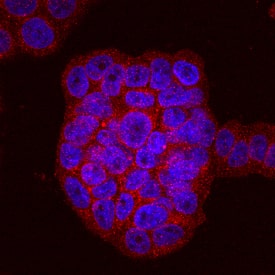
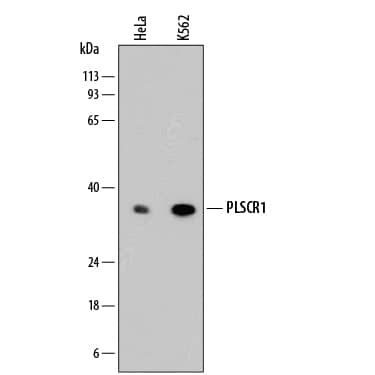


![TRAIL/TNFSF10 [Unconjugated]](/sites/all/modules/enterprise-tech/et_datasheets/images/novus_guarantee.png "TRAIL/TNFSF10 [Unconjugated]")
![Western Blot JNK1 Antibody (228601) [Unconjugated]](https://images.novusbio.com/images/antibody/JNK1_MAB17761_Western_Blot_5991.jpg)
![Western Blot JNK1 Antibody (228601) [Unconjugated]](https://images.novusbio.com/images/antibody/JNK1_MAB17761_Western_Blot_6327.jpg)
![Immunocytochemistry JNK1 Antibody (228601) [Unconjugated]](https://images.novusbio.com/images/antibody/JNK1_MAB17761_Immunocytochemistry__Immunofluorescence_20184.jpg)
![Western Blot ERK2 Antibody [Unconjugated]](https://images.novusbio.com/images/antibody/ERK2_AF1230_Western_Blot_5097.jpg)
![Knockout Validated ERK2 Antibody [Unconjugated]](https://images.novusbio.com/images/antibody/ERK2_AF1230_Knockout_Validated_22864.jpg)
![Immunohistochemistry ERK2 Antibody [Unconjugated]](https://images.novusbio.com/images/antibody/ERK2_AF1230_Immunohistochemistry_20696.jpg)