| Applications | WB, IHC, IP |
| Clone | 289802 |
| Clonality | Monoclonal |
| Host | Mouse |
| Conjugate | Alexa Fluor 350 |
| Immunogen | Mouse myeloma cell line NS0-derived recombinant human GASP‑2/WFIKKN Ala20-Asp548 Accession # Q96NZ8 |
| Specificity | Detects human GASP‑2/WFIKKN in direct ELISAs and Western blots. In direct ELISAs and Western blots, no cross-reactivity with recombinant human GASP-1 is observed. |
| Isotype | IgG2b |
| Clonality | Monoclonal |
| Host | Mouse |
| Purity Statement | Protein A or G purified |
| Innovator's Reward | Test in a species/application not listed above to receive a full credit towards a future purchase. |
| Storage | Protect from light. Do not freeze. 12 months from date of receipt, 2 to 8 °C as supplied |
| Buffer | Supplied 0.2 mg/mL in a saline solution containing BSA and Sodium Azide. |
Growth and differentiation factor-associated serum protein-2 (GASP-2) cDNA encodes a 548 amino acid protein that contains a 19 amino acid signal sequence and is comprised of many conserved domains: WAP, follistatin/Kazal, immunoglobulin, two tandem Kunitz, and netrin (1). Based on the order of these conserved domains, GASP-2 is also known as WFIKKN (1). Another related protein which contains the same domain structure is called WFIKKNRP (WFIKKN-related protein), or GASP-1 (2, 3). WAP, follistatin, Kunitz and netrin domains are all implicated in protease inhibition, and the GASP proteins may be multivalent protease inhibitors (1, 4). GASP-1 and -2 show distinct expression patterns both in the developing fetus and the adult. In the developing fetus, GASP-2 is abundant in the lung, skeletal muscle and liver while GASP-1 expression is highest in the brain, skeletal muscle, thymus and kidney (3). In the adult, GASP-2 is expressed primarily in the pancreas, liver, and thymus while GASP-1 is in the ovary, testis, and brain (3). Further characterization shows that GASP-1 inhibits myostatin (GDF-8) and the highly related protein, GDF-11, but not Activin or TGF-beta in vitro (2). By amino acid sequence, human GASP-2 shares 88% and 69% identity with canine/rat/mouse and chicken GASP-2, respectively, and 55% identity with human GASP-1.

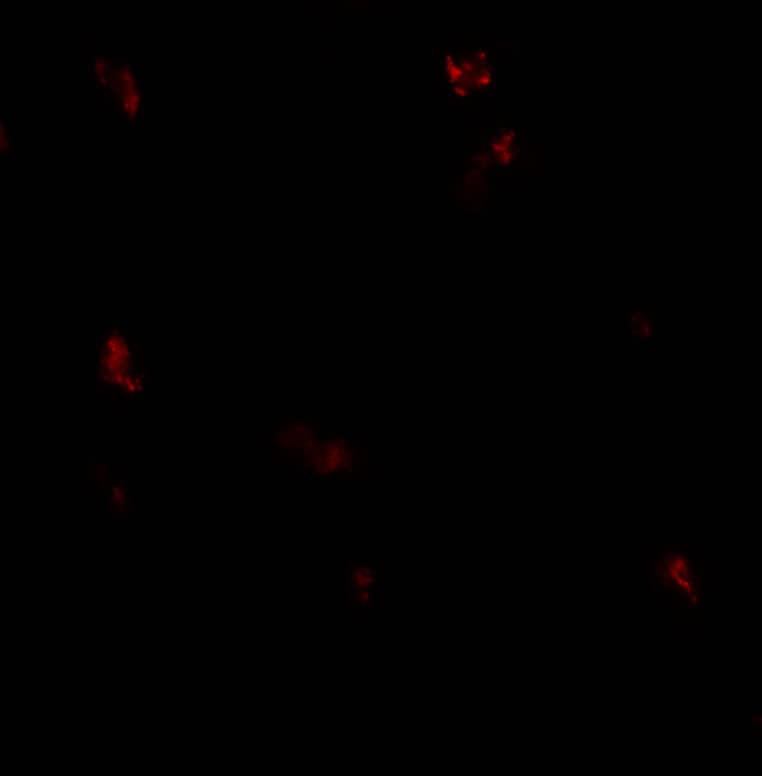

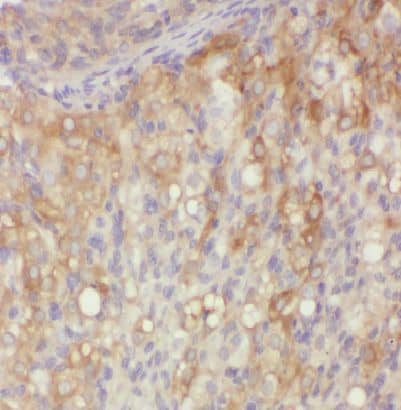


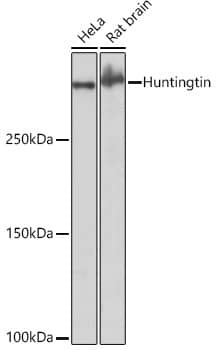


![GASP-2/WFIKKN Antibody (289802) [Alexa Fluor® 350]](/sites/all/modules/enterprise-tech/et_datasheets/images/novus_guarantee.png "GASP-2/WFIKKN Antibody (289802) [Alexa Fluor® 350]")
The concentration calculator allows you to quickly calculate the volume, mass or concentration of your vial. Simply enter your mass, volume, or concentration values for your reagent and the calculator will determine the rest.


![Bioactivity GDF-8/Myostatin [Unconjugated]](https://images.novusbio.com/images/protein/GDF-8_788-G8_CF_116.jpg)
![SDS-Page GDF-8/Myostatin [Unconjugated]](https://images.novusbio.com/images/protein/GDF-8_788-G8_CF_114.jpg)
![N/A Follistatin [HRP]](https://images.novusbio.com/images/elisa/DATA_Follistatin_DFN00_ELISA_681.jpg)
![N/A Follistatin [HRP]](https://images.novusbio.com/images/elisa/DATA_Follistatin_DFN00_ELISA_682.jpg)
![N/A Follistatin [HRP]](https://images.novusbio.com/images/elisa/Follistatin_DFN00_ELISA_97.jpg)
![SDS-Page GDF-11/BMP-11 [Unconjugated]](https://images.novusbio.com/images/protein/GDF-11_1958-GD_698.jpg)
![Mass Spectrometry GDF-11/BMP-11 [Unconjugated]](https://images.novusbio.com/images/protein/GDF-11_1958-GD_829.jpg)
![Bioactivity GDF-11/BMP-11 [Unconjugated]](https://images.novusbio.com/images/protein/GDF-11_1958-GD_700.jpg)
![SDS-Page BMP-4 [Unconjugated]](https://images.novusbio.com/images/protein/BMP-4_314-BP_100.jpg)
![Bioactivity BMP-4 [Unconjugated]](https://images.novusbio.com/images/314-bp_recombinant-human-bmp-4-protein-1882021123744.jpg)
![Bioactivity BMP-2 [Unconjugated]](https://images.novusbio.com/images/protein/355-bm_recombinant-human-mouse-rat-bmp-2-protein-bioactivity-181120209742.jpg)