NL001) and counterstained with DAPI (blue). View our protocol for
Fluorescent ICC Staining of Non-adherent Cells." class="big_lightbox">
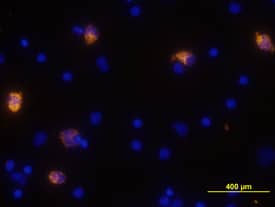
NL001) and counterstained with DAPI (blue). View our protocol for
Fluorescent ICC Staining of Non-adherent Cells." alt="CXCL10/IP-10 was detected in immersion fixed PHA-treated human peripheral blood mononuclear cells (PBMCs) using 10 µg/mL Goat Anti-Human CXCL10/IP-10 Antigen Affinity-purified Polyclonal Antibody (Catalog # AF-266-NA) for 3 hours at room temperature. Cells were stained with the NorthernLights™ 557-conjugated Anti-Goat IgG Secondary Antibody (red; Catalog #
NL001) and counterstained with DAPI (blue). View our protocol for
Fluorescent ICC Staining of Non-adherent Cells." class="big_thumb" />
266-IP) chemoattracts the BaF3 mouse pro-B cell line transfected with human CXCR3 in a dose-dependent manner (orange line). The amount of cells that migrated through to the lower chemotaxis chamber was measured by Resazurin (Catalog #
AR002). Chemotaxis elicited by Recombinant Human CXCL10/IP-10 (0.2 µg/mL) is neutralized (green line) by increasing concentrations of Goat Anti-Human CXCL10/IP-10 Antigen Affinity-purified Polyclonal Antibody (Catalog # AF-266-NA). The ND
50 is typically 1-4 µg/mL." class="big_lightbox">

266-IP) chemoattracts the BaF3 mouse pro-B cell line transfected with human CXCR3 in a dose-dependent manner (orange line). The amount of cells that migrated through to the lower chemotaxis chamber was measured by Resazurin (Catalog #
AR002). Chemotaxis elicited by Recombinant Human CXCL10/IP-10 (0.2 µg/mL) is neutralized (green line) by increasing concentrations of Goat Anti-Human CXCL10/IP-10 Antigen Affinity-purified Polyclonal Antibody (Catalog # AF-266-NA). The ND
50 is typically 1-4 µg/mL." class="big_thumb" />
MAB2661) coated on a Clear Polystyrene Microplate (Catalog #
DY990). Goat Anti-Human CXCL10/IP-10/CRG-2 Antigen Affinity-purified Polyclonal Antibody (Catalog # AF-266-NA) was biotinylated and incubated with the protein captured on the plate. Detection of the standard curve was achieved by incubating Streptavidin-HRP (Catalog #
DY998) followed by Substrate Solution (Catalog #
DY999) and stopping the enzymatic reaction with Stop Solution (Catalog #
DY994)." class="big_lightbox">
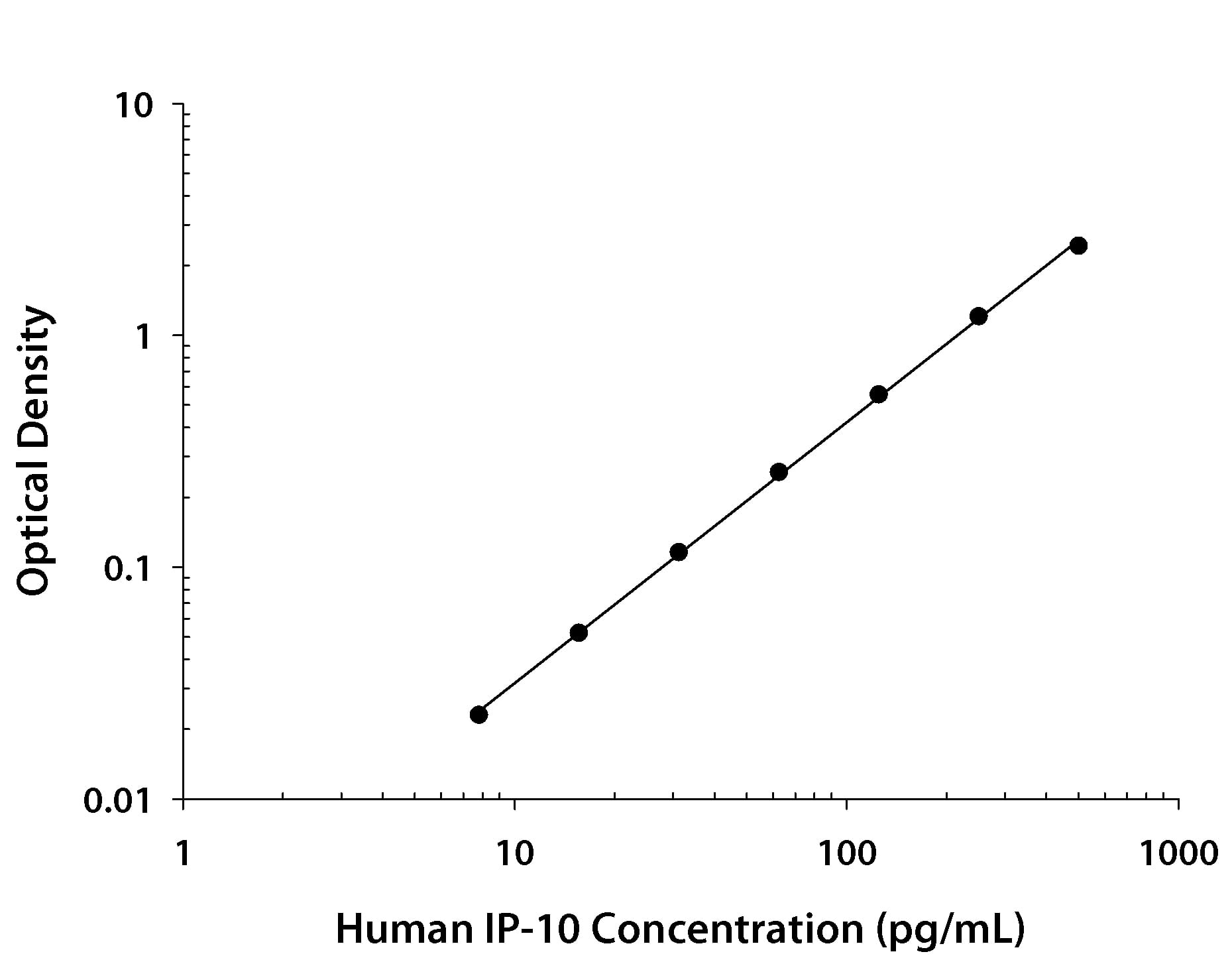
MAB2661) coated on a Clear Polystyrene Microplate (Catalog #
DY990). Goat Anti-Human CXCL10/IP-10/CRG-2 Antigen Affinity-purified Polyclonal Antibody (Catalog # AF-266-NA) was biotinylated and incubated with the protein captured on the plate. Detection of the standard curve was achieved by incubating Streptavidin-HRP (Catalog #
DY998) followed by Substrate Solution (Catalog #
DY999) and stopping the enzymatic reaction with Stop Solution (Catalog #
DY994)." class="big_thumb" />
266-IP) was serially diluted and captured by Mouse Anti-Human CXCL10/IP‑10/CRG‑2 Monoclonal Antibody (Catalog #
MAB266) coated on a Clear Polystyrene Microplate (Catalog #
DY990). Goat Anti-Human CXCL10/IP‑10/CRG‑2 Antigen Affinity-purified Polyclonal Antibody (Catalog # AF-266-NA) was biotinylated and incubated with the protein captured on the plate. Detection of the standard curve was achieved by incubating Streptavidin-HRP (Catalog #
DY998)" class="big_lightbox">
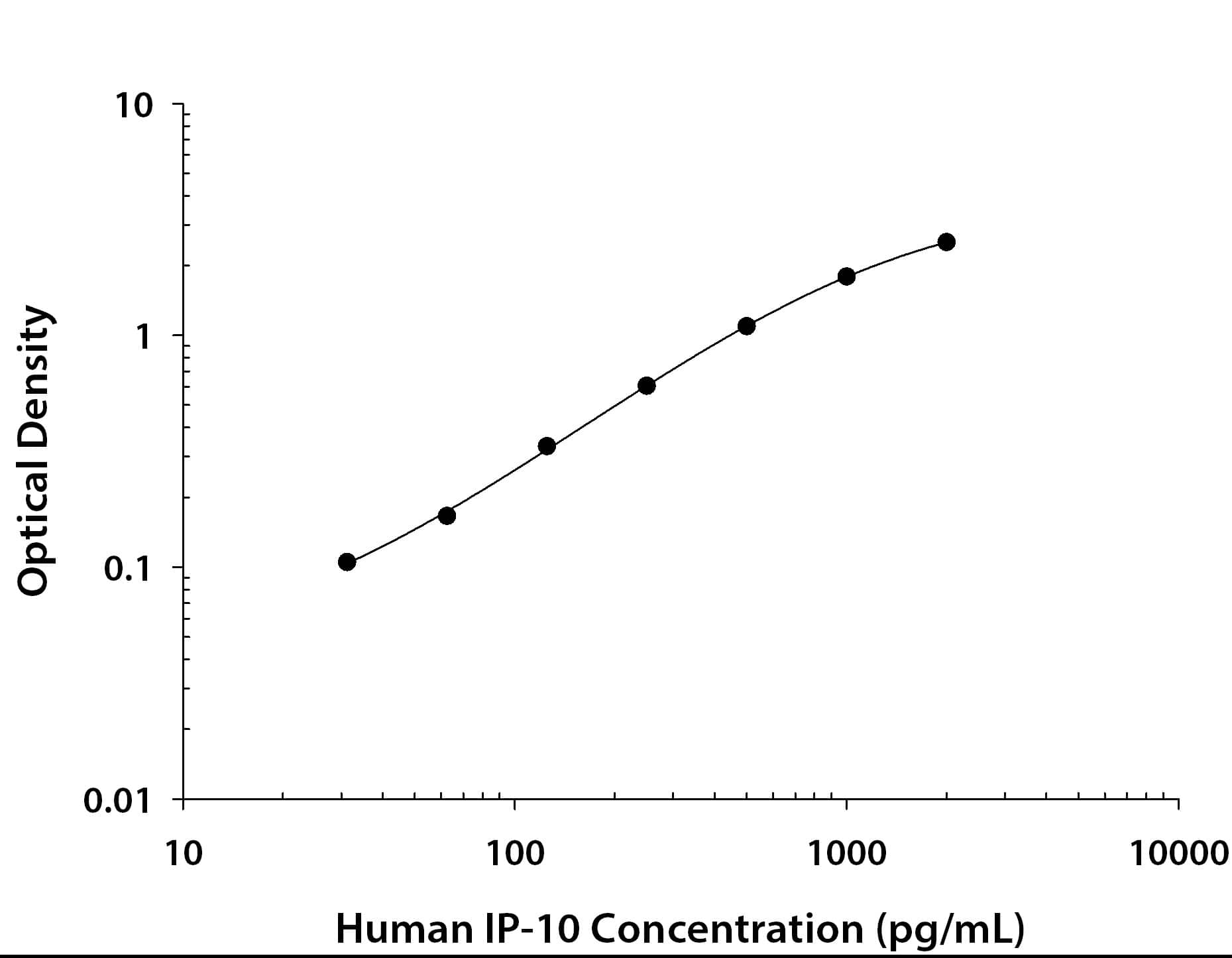
266-IP) was serially diluted and captured by Mouse Anti-Human CXCL10/IP‑10/CRG‑2 Monoclonal Antibody (Catalog #
MAB266) coated on a Clear Polystyrene Microplate (Catalog #
DY990). Goat Anti-Human CXCL10/IP‑10/CRG‑2 Antigen Affinity-purified Polyclonal Antibody (Catalog # AF-266-NA) was biotinylated and incubated with the protein captured on the plate. Detection of the standard curve was achieved by incubating Streptavidin-HRP (Catalog #
DY998)" class="big_thumb" />
 HAF017). A specific band was detected for CXCL10/IP-10/CRG-2 at approximately 15 kDa (as indicated). This experiment was conducted under reducing conditions and using Immunoblot Buffer Group 1." alt="Western blot shows lysates of RAW 264.7 mouse monocyte/macrophage cell line. PVDF membrane was probed with 1 µg/mL of Goat Anti-Mouse CXCL10/IP-10/CRG-2 Antigen Affinity-purified Polyclonal Antibody (Catalog # AF-466-NA) followed by HRP-conjugated Anti-Goat IgG Secondary Antibody (HAF017). A specific band was detected for CXCL10/IP-10/CRG-2 at approximately 15 kDa (as indicated). This experiment was conducted under reducing conditions and using Immunoblot Buffer Group 1." class="big_thumb" />
 266-IP) chemo-attracts the BaF3 mouse pro-B cell line transfected with human CXCR3 in a dose-dependent manner (orange line). The amount of cells that migrated through to the lower chemotaxis chamber was measured by Resazurin (Catalog # AR002). Chemotaxis elicited by Recombinant Human CXCL10/ IP-10 (0.2 µg/mL) is neutralized (green line) by increasing concentrations of Mouse Anti-Human CXCL10/IP-10 Mono-clonal Antibody (Catalog # MAB266). The ND50 is typically 0.5-2.0 µg/mL." alt="Recombinant Human CXCL10/ IP-10 (Catalog # 266-IP) chemo-attracts the BaF3 mouse pro-B cell line transfected with human CXCR3 in a dose-dependent manner (orange line). The amount of cells that migrated through to the lower chemotaxis chamber was measured by Resazurin (Catalog # AR002). Chemotaxis elicited by Recombinant Human CXCL10/ IP-10 (0.2 µg/mL) is neutralized (green line) by increasing concentrations of Mouse Anti-Human CXCL10/IP-10 Mono-clonal Antibody (Catalog # MAB266). The ND50 is typically 0.5-2.0 µg/mL." class="big_thumb" />
 NL001) and counterstained with DAPI (blue). View our protocol for Fluorescent ICC Staining of Non-adherent Cells." alt="CXCL10/IP-10 was detected in immersion fixed PHA-treated human peripheral blood mononuclear cells (PBMCs) using 10 µg/mL Goat Anti-Human CXCL10/IP-10 Antigen Affinity-purified Polyclonal Antibody (Catalog # AF-266-NA) for 3 hours at room temperature. Cells were stained with the NorthernLights™ 557-conjugated Anti-Goat IgG Secondary Antibody (red; Catalog # NL001) and counterstained with DAPI (blue). View our protocol for Fluorescent ICC Staining of Non-adherent Cells." class="big_thumb" />
 466-CR) chemoattracts the BaF3 mouse pro‑B cell line transfected with human CXCR3 in a dose-dependent manner (orange line). The amount of cells that migrated through to the lower chemotaxis chamber was measured by Resazurin (Catalog # AR002). Chemotaxis elicited by Recombinant Mouse CXCL10/CRG‑2 (0.5 µg/mL) is neutralized (green line) by increasing concentrations of Mouse CXCL10/CRG‑2 Monoclonal Antibody (Catalog # MAB466). The ND50 is typically 10-40 µg/mL." alt="Recombinant Mouse CXCL10/CRG‑2 (Catalog # 466-CR) chemoattracts the BaF3 mouse pro‑B cell line transfected with human CXCR3 in a dose-dependent manner (orange line). The amount of cells that migrated through to the lower chemotaxis chamber was measured by Resazurin (Catalog # AR002). Chemotaxis elicited by Recombinant Mouse CXCL10/CRG‑2 (0.5 µg/mL) is neutralized (green line) by increasing concentrations of Mouse CXCL10/CRG‑2 Monoclonal Antibody (Catalog # MAB466). The ND50 is typically 10-40 µg/mL." class="big_thumb" />


![N/A CXCL10/IP-10/CRG-2 [HRP]](http://images.novusbio.com/fullsize/elisa/DATA_CXCL10_DIP100_ELISA_723.jpg "N/A CXCL10/IP-10/CRG-2 [HRP]")
![N/A CXCL10/IP-10/CRG-2 [HRP]](http://images.novusbio.com/fullsize/elisa/DATA_CXCL10_DIP100_ELISA_724.jpg)
![N/A CXCL10/IP-10/CRG-2 [HRP]](http://images.novusbio.com/fullsize/elisa/CXCL10_DIP100_ELISA_121.jpg)
![N/A CXCL10/IP-10/CRG-2 [Biotin]](http://images.novusbio.com/fullsize/elisa/DATA_CXCL10_DY266_ELISA_1870.jpg "N/A CXCL10/IP-10/CRG-2 [Biotin]")
![N/A CXCL10/IP-10/CRG-2 [Biotin]](http://images.novusbio.com/fullsize/elisa/DATA_CXCL10_DY466_ELISA_2048.jpg "N/A CXCL10/IP-10/CRG-2 [Biotin]")


 466-CR) chemoattracts the BaF3 mouse pro-B cell line transfected with human CXCR3 in a dose-dependent manner (orange line). The amount of cells that migrated through to the lower chemotaxis chamber was measured by Resazurin (


 466-CR) was serially diluted and captured by Rat Anti-Mouse CXCL10/IP‑10/CRG‑2 Monoclonal Antibody (Catalog #
  266-IP) was serially diluted and captured by Mouse Anti-Human CXCL10/IP‑10/CRG‑2 Monoclonal Antibody (Catalog # MAB266) coated on a Clear Polystyrene Microplate (Catalog #
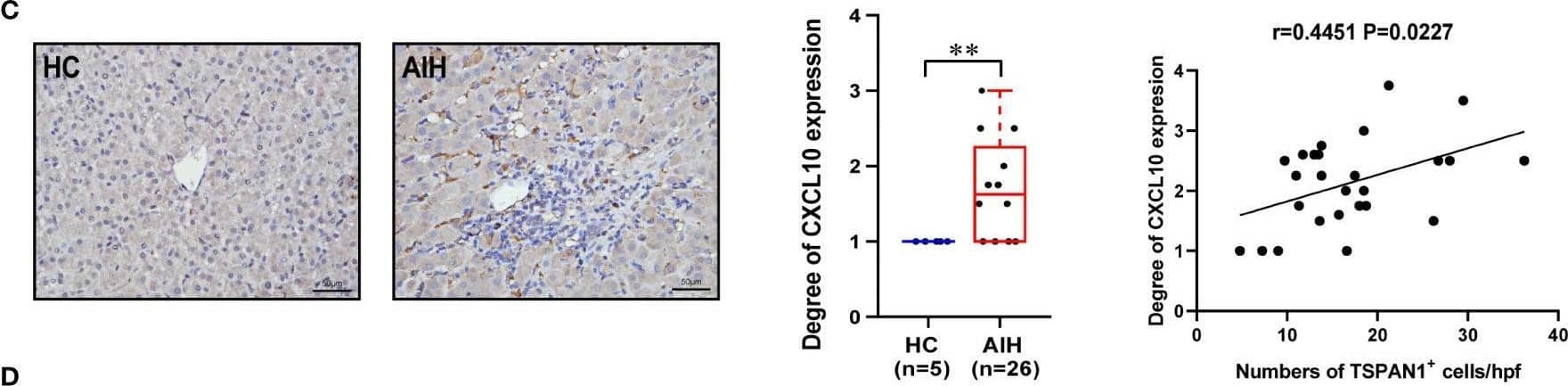
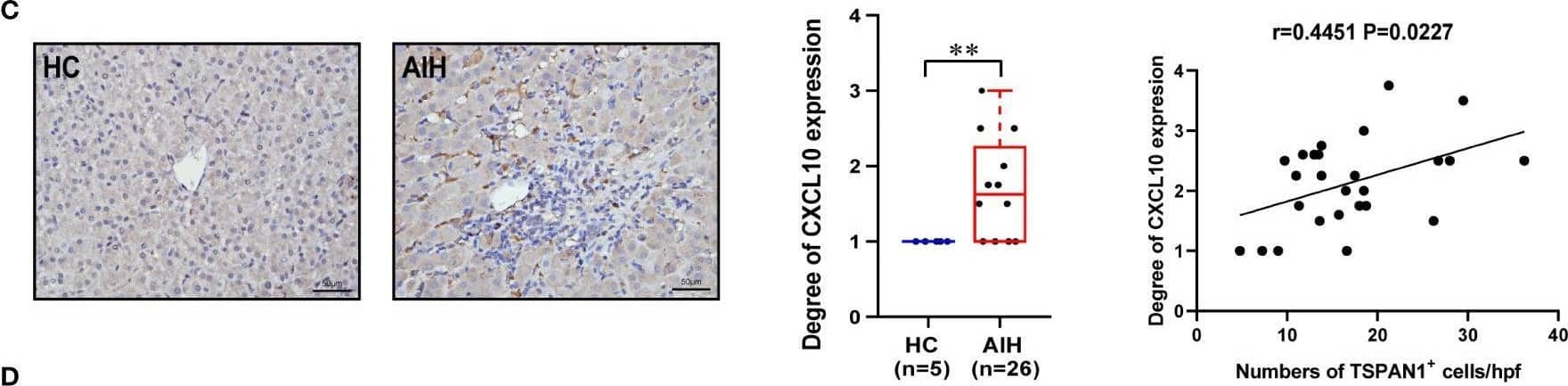
  VC004). Tissue was stained using DAB (brown) and counterstained with hematoxylin (blue). Specific staining was localized to cytoplasm. View our protocol for
  266-IP) chemoattracts the BaF3 mouse pro-B cell line transfected with human CXCR3 in a dose-dependent manner (orange line). The amount of cells that migrated through to the lower chemotaxis chamber was measured by Resazurin (Catalog #
  MAB2661) coated on a Clear Polystyrene Microplate (Catalog #

 266-IP) was serially diluted and captured by Mouse Anti-Human CXCL10/IP‑10/CRG‑2 Monoclonal Antibody (Catalog #


 466-CR) was serially diluted and captured by Rat Anti-Mouse CXCL10/IP‑10/CRG‑2 Monoclonal Antibody (Catalog # MAB466) coated on a Clear Polystyrene Microplate (Catalog #
 ![Mouse CXCL10/IP-10/CRG-2 ELISA Kit [NBP1-92665] - Data for Mouse IP-10 Platinum ELISA](http://images.novusbio.com/fullsize/Mouse-CXCL10-IP-10-CRG-2-ELISA-Kit-NBP1-92665-img0001.jpg "Mouse CXCL10/IP-10/CRG-2 ELISA Kit [NBP1-92665] - Data for Mouse IP-10 Platinum ELISA")
![ELISA: Rat CXCL10/IP-10/CRG-2 ELISA Kit (Colorimetric) [KA2203] - CXCL10/IP-10/CRG-2 ELISA Kit [Biotin] [KA2203] - These standard curves are provided for demonstration only. A standard curve should be generated for each set of samples assayed.](http://images.novusbio.com/fullsize/Rat-CXCL10-IP-10-CRG-2-ELISA-Kit-Colorimetric-ELISA-KA2203-img0002.jpg "ELISA: Rat CXCL10/IP-10/CRG-2 ELISA Kit (Colorimetric) [KA2203] - CXCL10/IP-10/CRG-2 ELISA Kit [Biotin] [KA2203] - These standard curves are provided for demonstration only. A standard curve should be generated for each set of samples assayed.")


