| Reactivity | HuSpecies Glossary |
| Applications | Binding Activity |
| Format | Carrier-Free |
| Details of Functionality | Measured in a competitive binding assay. When rrNeurexin-1 alpha (Catalog # 4485-NX) is immobilized at 1 µg/mL (100 µL/well), rhNeurexophilin-1 inhibits 50% binding of biotinylated rrNeurexophilin-1 (250 ng/mL) at the concentration range of 1‑3 µg/mL. |
| Source | Mouse myeloma cell line, NS0-derived human Neurexophilin-1 protein Ala22-Gly271, with a C-terminal 6-His tag |
| Accession # | |
| N-terminal Sequence | Ala22 |
| Protein/Peptide Type | Recombinant Proteins |
| Gene | NXPH1 |
| Purity | >90%, by SDS-PAGE under reducing conditions and visualized by silver stain |
| Endotoxin Note | <0.10 EU per 1 μg of the protein by the LAL method. |
| Dilutions |
|
| Theoretical MW | 29.4 kDa. Disclaimer note: The observed molecular weight of the protein may vary from the listed predicted molecular weight due to post translational modifications, post translation cleavages, relative charges, and other experimental factors. |
| SDS-PAGE | 40-60 kDa, reducing conditions |
| Storage | Use a manual defrost freezer and avoid repeated freeze-thaw cycles.
|
| Buffer | Lyophilized from a 0.2 μm filtered solution in PBS. |
| Purity | >90%, by SDS-PAGE under reducing conditions and visualized by silver stain |
| Reconstitution Instructions | Reconstitute at 100 μg/mL in sterile PBS. |
Neurexophilin-1 (NXPH1) is one of at least four vertebrate neuropeptide-like secreted glycoproteins in the neurexophilin family (1, 2). The 271 amino acid (aa) NXPH1 sequence contains a 21 aa signal peptide, an 86 aa propeptide that is cleaved at a basic motif, and a 164 aa mature protein that contains three potential N-glycosylation sites in the N-terminal portion and six conserved cysteines in the C-terminal portion (1). Mature human NXPH1 shares 99% aa identity with mouse, rat, equine, bovine and canine NXPH1. NXPH1 is expressed selectively in subpopulations of neurons within the cerebral cortex, cerebellum and olfactory bulb that are thought to be inhibitory interneurons (2, 3). In humans, NXPH-2 and -3 are most similar to NXPH1, sharing 84% and 64% aa identity within the mature region, respectively. In rodents, which do not express NXPH-2, expression of NXPH1 and NXPH-3 does not appear to coincide. However, both serve as tightly bound extracellular ligands for alpha -neurexins, synaptic transmembrane molecules that are essential for calcium-triggered neurotransmitter release (1, 4, 5). By contrast, NXPH-4 does not bind alpha -neurexins (1, 4). Genetic deletion of NXPH1 and/or NXPH-3 produces no anatomical effect, although mice lacking NXPH-3 show defects in motor coordination (4, 6).
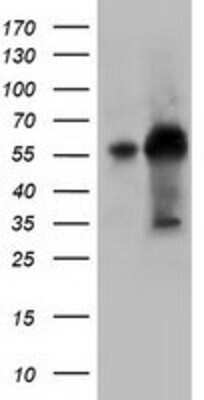
![Western Blot Neurexophilin-3 Antibody [Unconjugated]](https://images.novusbio.com/images/antibody/Neurexophilin-3_AF5098_Western_Blot_12281.jpg)
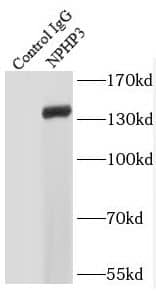
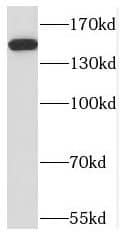
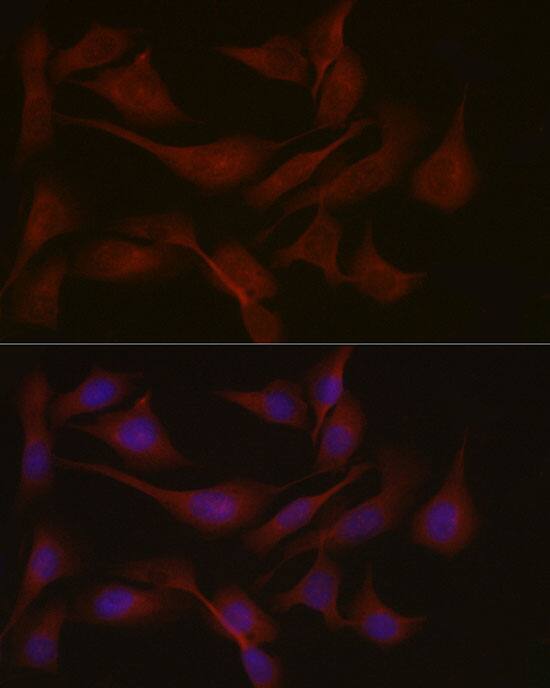


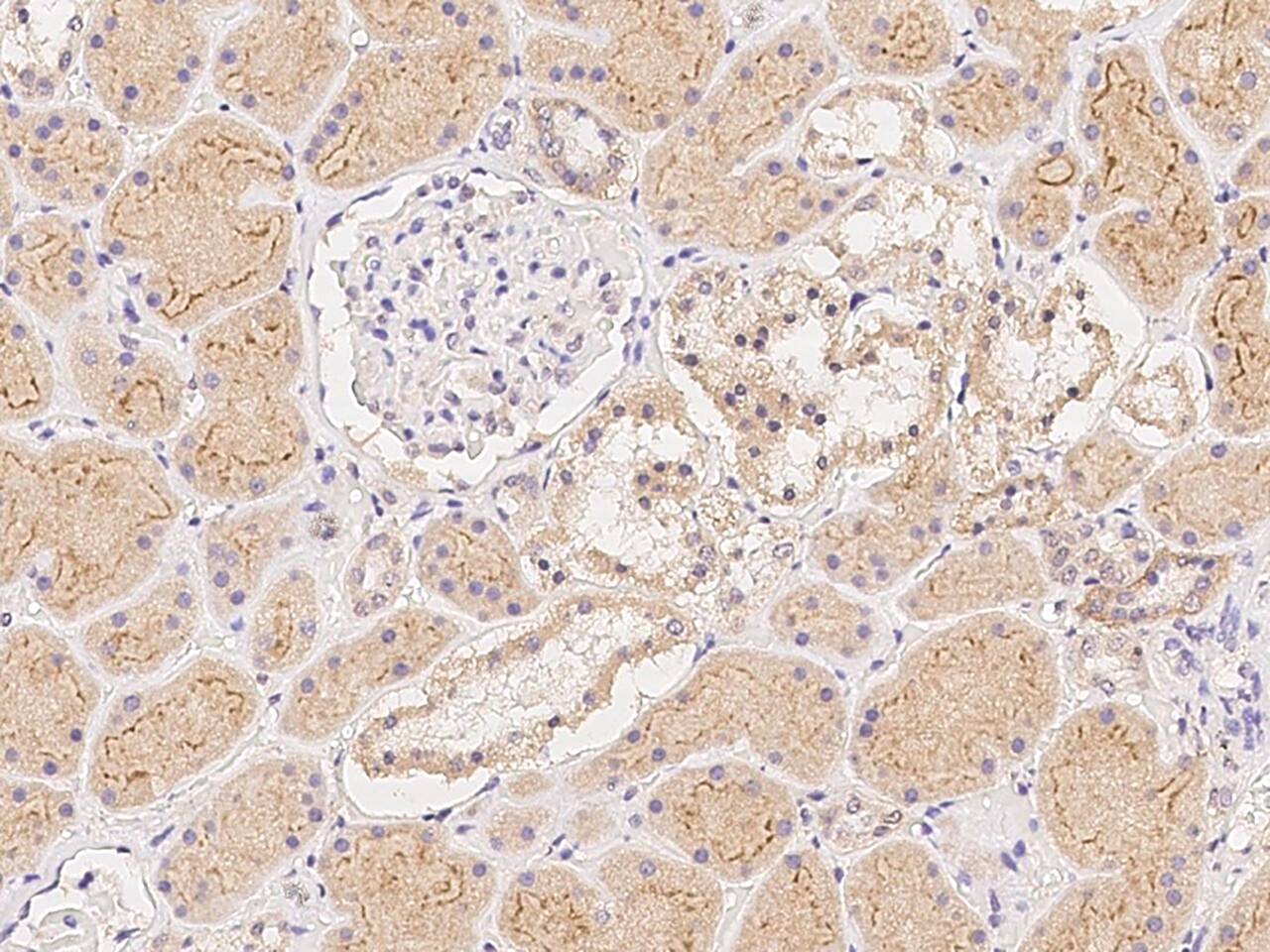
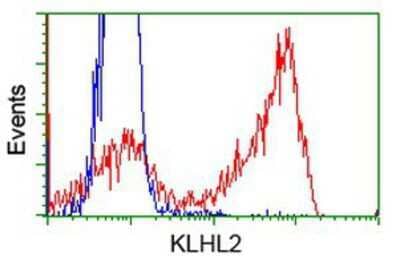
![Intracellular Staining by Flow Cytometry ICA1 Antibody [Unconjugated]](https://images.novusbio.com/images/antibody/ICA1_AF4084_Flow_Cytometry_8226.jpg)
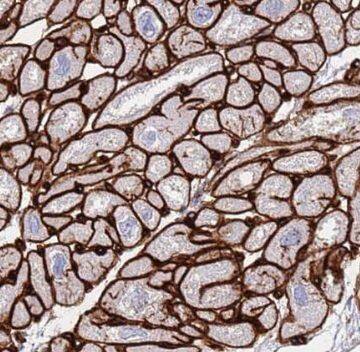
![Immunohistochemistry ICA1 Antibody [Unconjugated]](https://images.novusbio.com/images/af4084_human-ica1-affinity-purified-polyclonal-ab-156202211583.jpg)



The concentration calculator allows you to quickly calculate the volume, mass or concentration of your vial. Simply enter your mass, volume, or concentration values for your reagent and the calculator will determine the rest.


![SDS-Page LIGHT/TNFSF14 [Unconjugated]](https://images.novusbio.com/images/protein/LIGHT_664-LI_719.jpg)
![Bioactivity LIGHT/TNFSF14 [Unconjugated]](https://images.novusbio.com/images/protein/LIGHT_664-LI_721.jpg)
![Immunohistochemistry CRY1 Antibody [Unconjugated]](https://images.novusbio.com/images/antibody/af3764_human-mouse-cry1-affinity-purified-polyclonal-ab-immunohistochemistry-16122024133047..jpg)
![Immunocytochemistry CRY1 Antibody [Unconjugated]](https://images.novusbio.com/images/antibody/CRY1_AF3764_Immunocytochemistry__Immunofluorescence_19530.jpg)
![Immunohistochemistry CRY1 Antibody [Unconjugated]](https://images.novusbio.com/images/antibody/af3764_human-mouse-cry1-affinity-purified-polyclonal-ab-immunohistochemistry-16122024132946..jpg)
![Immunohistochemistry Dystroglycan Antibody [Unconjugated]](https://images.novusbio.com/images/antibody/Dystroglycan_AF6868_Immunohistochemistry_11019.jpg)
![Western Blot Dystroglycan Antibody [Unconjugated]](https://images.novusbio.com/images/antibody/Dystroglycan_AF6868_Western_Blot_11065.jpg)