| Reactivity | HuSpecies Glossary |
| Applications | Enzyme Activity |
| Format | Carrier-Free |
| Details of Functionality | Measured by its ability to cleave the fluorogenic peptide substrate, Gly-Pro-7-amido-4-methylcoumarin (GP-AMC). The specific activity is >750 pmol/min/μg, as measured under the described conditions. |
| Source | Spodoptera frugiperda, Sf 21 (baculovirus)-derived human DPP9 protein Arg2-Leu892 with an N-terminal Met and 6-His tag |
| Accession # | |
| N-terminal Sequence | No result obtained |
| Protein/Peptide Type | Recombinant Enzymes |
| Gene | DPP9 |
| Purity | >90%, by SDS-PAGE visualized with Silver Staining and quantitative densitometry by Coomassie® Blue Staining |
| Endotoxin Note | <1.0 EU per 1 μg of the protein by the LAL method. |
| Dilutions |
|
|
| Theoretical MW | 101 kDa. Disclaimer note: The observed molecular weight of the protein may vary from the listed predicted molecular weight due to post translational modifications, post translation cleavages, relative charges, and other experimental factors. |
|
| SDS-PAGE | 92 kDa, reducing conditions |
|
| Publications |
|
| Storage | Use a manual defrost freezer and avoid repeated freeze-thaw cycles.
|
|||
| Buffer | Supplied as a 0.2 μm filtered solution in Tris, NaCl and Glycerol. |
|||
| Purity | >90%, by SDS-PAGE visualized with Silver Staining and quantitative densitometry by Coomassie® Blue Staining |
|||
| Assay Procedure |
*Adjusted for Substrate Blank **Derived using calibration standard 7-amino, 4-Methyl Coumarin (Sigma, Catalog # A-9891). Per Well:
|
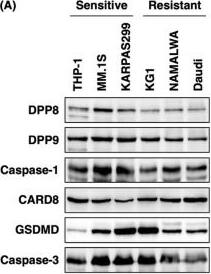
DPP9 is a member of the S9b family of serine peptidases (1, 2). It shares 19% amino acid identity with DPP4 and 58% amino acid identity with DPP8. It exhibits post‑proline dipeptidyl aminopeptidase activity, cleaving Xaa-Pro dipeptides from the N-terminus of oligo- and polypeptides (3). Unlike DPP4, DPP9 does not appear to be membrane bound and is localized exclusively in the cytoplasm (4). This family of proline-specific dipeptidyl peptidases has been implicated in a variety of diseases including type 2 diabetes, obesity and cancer, and has been a potential target for drug discovery (5, 6).
![In-situ Hybridization Fibroblast Activation Protein alpha/FAP Antibody [Unconjugated]](https://images.novusbio.com/images/antibody/af3715_human-fap-affinity-purified-polyclonal-ab-in-situ-hybridization-2352024182645..jpg)
![Western Blot Fibroblast Activation Protein alpha/FAP Antibody [Unconjugated]](https://images.novusbio.com/images/antibody/Fibroblast_Activation_Protein_alpha_AF3715_Western_Blot_11934.jpg)
![Simple Western Fibroblast Activation Protein alpha/FAP Antibody [Unconjugated]](https://images.novusbio.com/images/antibody/af3715_human-fap-affinity-purified-polyclonal-ab-simple-western-110202114645.jpg)


The concentration calculator allows you to quickly calculate the volume, mass or concentration of your vial. Simply enter your mass, volume, or concentration values for your reagent and the calculator will determine the rest.


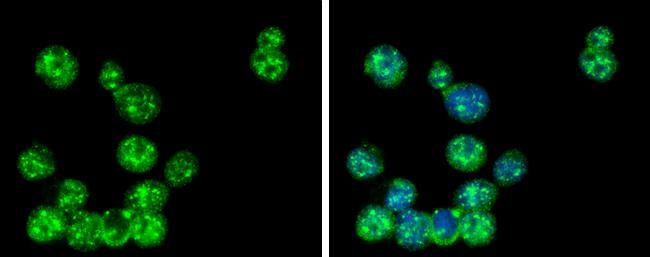
![Immunocytochemistry/ Immunofluorescence DPPIV/CD26 Antibody [Unconjugated]](https://images.novusbio.com/images/af1180_human-dppiv-cd26-affinity-purified-polyclonal-ab-44202415425025.jpg)
![Western Blot DPPIV/CD26 Antibody [Unconjugated]](https://images.novusbio.com/images/af1180_human-dppiv-cd26-affinity-purified-polyclonal-ab-812025555283.jpg)
![Immunohistochemistry DPPIV/CD26 Antibody [Unconjugated]](https://images.novusbio.com/images/antibody/DPPIV_AF1180_Immunohistochemistry_17209.jpg)





![Immunohistochemistry Aminopeptidase N/CD13 Antibody [Unconjugated]](https://images.novusbio.com/images/antibody/Aminopeptidase_N_AF2335_Immunohistochemistry_23316.jpg)
![Immunocytochemistry Aminopeptidase N/CD13 Antibody [Unconjugated]](https://images.novusbio.com/images/antibody/Aminopeptidase_N_AF2335_Immunocytochemistry__Immunofluorescence_17382.jpg)


