| Immunogen | A synthetic peptide (IGAALDTIQYSKH) corresponding to the C-terminal part of human Sequestosome 1 conjugated to the Blue Carrier Protein has been used as the immunogen. The peptide is homologous with the corresponding sequence derived from Sequestosome 1 protein in mouse, rat and bovine. |
| Localization | Accession Number: p60_HUMAN ; p60_MOUSE ; p60_RAT ; p60_BOVINE ; |
| Specificity | The specificity was confirmed by immunohistochemical analysis on paraffin embedded human brain. |
| Clonality | Polyclonal |
| Host | Rabbit |
| Gene | SQSTM1 |
| Purity | Unpurified |
| Innovator's Reward | Test in a species/application not listed above to receive a full credit towards a future purchase. |
| Storage | Store at 4C short term. Aliquot and store at -20C long term. Avoid freeze-thaw cycles. |
| Buffer | Whole antisera |
| Preservative | No Preservative |
| Concentration | LYOPH |
| Purity | Unpurified |
| Reconstitution Instructions | Please contact technical support for detailed reconstituion instruction. |


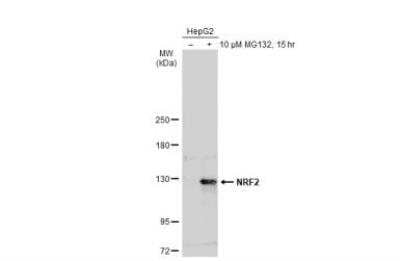


![Western Blot DOK1 [p Tyr362] Antibody - BSA Free](https://images.novusbio.com/images/DOK1-[p-Tyr362]-Antibody-Western-Blot-NB100-82112-img0001.jpg)
![Immunohistochemistry-Paraffin DOK1 [p Tyr362] Antibody - BSA Free](https://images.novusbio.com/images/nb100-82112_rabbit-polyclonal-dok1-p-tyr362-antibody-103202523464515.jpg)
![Western Blot DOK1 [p Tyr362] Antibody - BSA Free](https://images.novusbio.com/images/DOK1-[p-Tyr362]-Antibody-Western-Blot-NB100-82112-img0004.jpg)


Secondary Antibodies |
Isotype Controls |
Research Areas for p62/SQSTM1 Antibody (R-162-100)Find related products by research area.
|
|
Understanding Mitophagy Mechanisms: Canonical PINK1/Parkin, LC3-Dependent Piecemeal, and LC3-Independent Mitochondrial Derived Vesicles By Christina Towers, PhD What is Mitophagy?The selective degradation of mitochondria via double membrane autophagosome vesicles is called mitophagy. Damaged mitochondria can generate harmful amounts of reactive ox... Read full blog post. |
|
Autophagy Research Update: What a difference a year makes! By Christina Towers, PhD Over the last two decades the field of autophagy has exploded! Innovative techniques, comprehensive analysis and disease-relevant models have yielded basic and clinical discoveries of conseque... Read full blog post. |
|
Autophagy and Metastasis By Christina Towers, PhD The majority of cancer patients die from metastatic disease at secondary sites. The threshold to undergo metastasis is high. Only a minority of cancer cells acquire invasive phenotypes... Read full blog post. |
|
Optogenetic Control of Mitophagy: AMBRA1 based mitophagy switch By Christina Towers, PhD Mitophagy in the BrainSelective autophagic degradation of damaged mitochondria, known as mitophagy, has been described as a cyto-protective process. Accordingly, defects in mitophagy h... Read full blog post. |
|
Read full blog post. |
|
How to visualize autophagy by microscopy By Christina Towers, PhD Autophagy is a recycling process that relies on the formation of a unique organelle termed an autophagosome. An elegant way to monitor autophagy is through various microscopy techniques to... Read full blog post. |
|
RNA-binding protein Staufen1 conspires with Atxn2 in stress granules to cause neurodegeneration by dysregulating RNA metabolism By Jamshed Arslan Pharm.D. Spinocerebellar ataxia type 2 (SCA2) is a movement disorder characterized by neurodegeneration. The cause of this autosomal dominant disease is a mutation in the RNA processing gene Atxn2,... Read full blog post. |
|
How a cell "reaches" out for help By Christina Towers, PhD. Parkinson's disease is a debilitating neurodegenerative condition defined by the accumulation of alpha-synuclein-containing (alpha-SYN) intra-cytoplasmic inclusions, called Lewy bodies. The ... Read full blog post. |
|
Measuring Autophagic Flux with LC3 protein levels: The do's and don'ts By Christina Towers, PhD. Autophagy is a dynamic cellular recycling process that can be influenced by many different external and internal stimuli. The most commonly used assay to measure autophagy is a western blot f... Read full blog post. |
|
Crosstalk Between Oxidative Stress and Autophagy By Christina Towers, PhD. Role of Reactive Species in Cellular FunctionOxidative stress is a byproduct of an imbalance between oxidants and antioxidants present in the cell, resulting in dysfunctional redox si... Read full blog post. |
The concentration calculator allows you to quickly calculate the volume, mass or concentration of your vial. Simply enter your mass, volume, or concentration values for your reagent and the calculator will determine the rest.


![SDS-PAGE TNF-alpha [Unconjugated]](https://images.novusbio.com/images2/TNF-alpha_210-TA_256.jpg)
![Bioactivity TNF-alpha [Unconjugated]](https://images.novusbio.com/images2/TNFalpha_210TA_1658.jpg)
![SEC-MALS TNF-alpha [Unconjugated]](https://images.novusbio.com/images/210-ta_recombinant-human-tnf-alpha-protein-sec-mals-35202312244..jpg)
![Western Blot Src [p Tyr419] Antibody [Unconjugated]](https://images.novusbio.com/images2/Src_AF2685_Western_Blot_5209.jpg)
![Simple Western Src [p Tyr419] Antibody [Unconjugated]](https://images.novusbio.com/images2/16327.jpg)
![Immunohistochemistry Src [p Tyr419] Antibody [Unconjugated]](https://images.novusbio.com/images2/Src_AF2685_Immunohistochemistry_7158.jpg)
![Western Blot ERK2 Antibody [Unconjugated]](https://images.novusbio.com/images2/ERK2_AF1230_Western_Blot_5097.jpg)
![Immunohistochemistry ERK2 Antibody [Unconjugated]](https://images.novusbio.com/images2/ERK2_AF1230_Immunohistochemistry_20696.jpg)
![Knockout Validated ERK2 Antibody [Unconjugated]](https://images.novusbio.com/images2/ERK2_AF1230_Knockout_Validated_22864.jpg)


![Immunohistochemistry-Paraffin TOR/mTOR [p Ser2448] Antibody - BSA Free](https://images.novusbio.com/images/TOR-mTOR-[p-Ser2448]-Antibody-Immunohistochemistry-Paraffin-NB600-607-img0005.jpg)
![Western Blot TOR/mTOR [p Ser2448] Antibody - BSA Free](https://images.novusbio.com/images/TOR-mTOR-[p-Ser2448]-Antibody-Western-Blot-NB600-607-img0006.jpg)
![Data TOR/mTOR [p Ser2448] Antibody - BSA Free](https://images.novusbio.com/images/TOR-mTOR-[p-Ser2448]-Antibody-N-A-NB600-607-img0008.jpg)

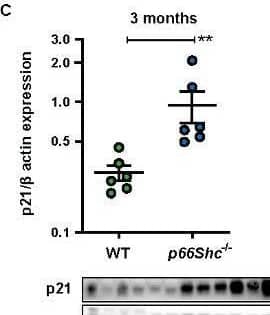
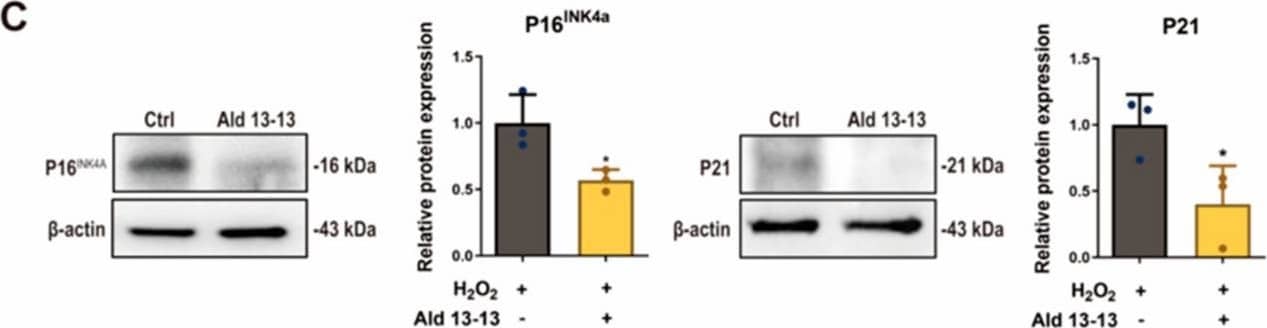


![Immunohistochemistry IL-1 RI Antibody [Unconjugated]](https://images.novusbio.com/images2/IL1_RI_AF771_Immunohistochemistry_22597.jpg)
![Neutralization IL-1 RI Antibody [Unconjugated]](https://images.novusbio.com/images2/IL-1_RI_AF771_Block_Neutralize_8962.jpg)


