| Immunogen | Synthetic peptide corresponding to residues on the C terminus of human LCAT. |
| Specificity | A synthetic peptide corresponding to residues on the C-terminus of human LCAT was used as an immunogen. |
| Isotype | IgG |
| Clonality | Monoclonal |
| Host | Rabbit |
| Gene | LCAT |
| Purity | Tissue culture supernatant |
| Innovator's Reward | Test in a species/application not listed above to receive a full credit towards a future purchase. |
| Dilutions |
|
|
| Application Notes | This antibody is useful for flow cytometry / FACS analysis, Immunocytochemistry, Immunohistochemistry-Paraffin, immunoprecipitation and Western Blot |
|
| Publications |
|
| Storage | Aliquot and store at -20C or -80C. Avoid freeze-thaw cycles. |
| Buffer | 49% PBS, 0.05% BSA and 50% Glycerol |
| Preservative | 0.01% Sodium Azide |
| Purity | Tissue culture supernatant |
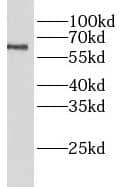
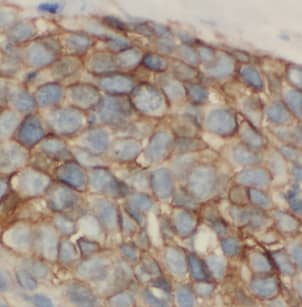


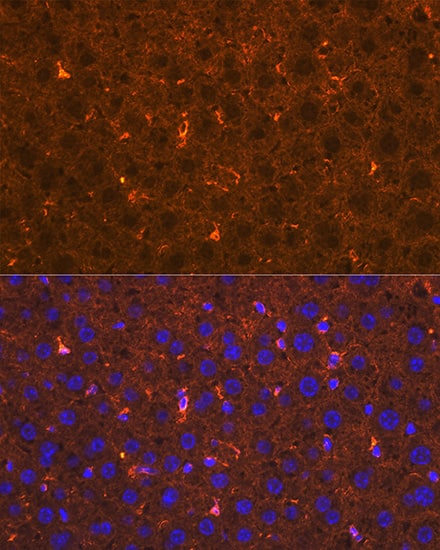
![Simple Western Albumin Antibody (188835) [Unconjugated] - Serum](https://images.novusbio.com/images2/Albumin_MAB1455_Simple_Western_21888.jpg)
![Immunocytochemistry Albumin Antibody (188835) [Unconjugated] - Serum](https://images.novusbio.com/images2/Albumin_MAB1455_Immunocytochemistry__Immunofluorescence_17777.jpg)
![Immunohistochemistry Albumin Antibody (188835) [Unconjugated] - Serum](https://images.novusbio.com/images2/Albumin_MAB1455_Immunohistochemistry_23317.jpg)



| Publication using NB110-57158 | Applications | Species |
|---|---|---|
| Bogan RL, Hennebold JD. The reverse cholesterol transport system as a potential mediator of luteolysis in the primate corpus luteum. Reproduction 2010-01-01 [PMID: 19776099] |
Secondary Antibodies |
Isotype Controls |
Research Areas for LCAT Antibody (NB110-57158)Find related products by research area.
|
The concentration calculator allows you to quickly calculate the volume, mass or concentration of your vial. Simply enter your mass, volume, or concentration values for your reagent and the calculator will determine the rest.


![Immunohistochemistry Lipoprotein Lipase/LPL Antibody [Unconjugated]](https://images.novusbio.com/images2/Lipoprotein_Lipase_AF7197_Immunohistochemistry_21186.jpg)
![Western Blot Lipoprotein Lipase/LPL Antibody [Unconjugated]](https://images.novusbio.com/images2/Lipoprotein_Lipase_AF7197_Western_Blot_11656.jpg)
![Immunocytochemistry Lipoprotein Lipase/LPL Antibody [Unconjugated]](https://images.novusbio.com/images2/Lipoprotein_Lipase_AF7197_Immunocytochemistry_11911.jpg)
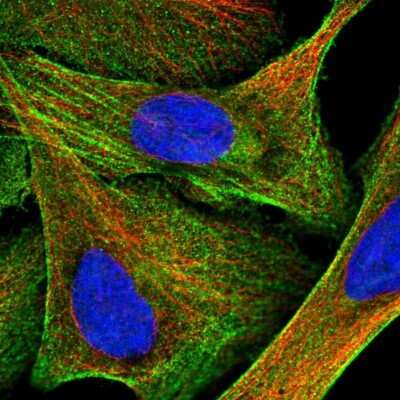


![Immunohistochemistry CD55/DAF Antibody [Unconjugated]](https://images.novusbio.com/images2/CD55_AF2009_Immunohistochemistry_6728.jpg)
![Immunocytochemistry CD55/DAF Antibody [Unconjugated]](https://images.novusbio.com/images2/CD55_AF2009_Immunocytochemistry__Immunofluorescence_23052.jpg)
![Immunocytochemistry Insulin Antibody (182410) [Unconjugated]](https://images.novusbio.com/images2/Insulin_MAB1417_Immunocytochemistry_9376.jpg)
![Immunohistochemistry Insulin Antibody (182410) [Unconjugated]](https://images.novusbio.com/images2/mab1417_human-bovine-mouse-insulin-mab-clone-182410-immunohistochemistry-308202115145.jpg)