| Immunogen | Human Apolipoprotein E |
| Specificity | NB100-65261 recognizes Apolipoprotein E (APOE). APOE is important in the metabolism of lipoproteins and in cardiovascular disease. More recently it has been linked to Alzheimer's disease. It is thought that APOE enhances the proteolytic breakdown of the beta-amyloid peptide, a major component of amyloid plaques. NB100-65261 has minimal cross reactivity with Apo A-1, A-2, B, C-2, C-3 and serum proteins. |
| Clonality | Polyclonal |
| Host | Goat |
| Gene | APOE |
| Purity | Protein G purified |
| Innovator's Reward | Test in a species/application not listed above to receive a full credit towards a future purchase. |
| Dilutions |
|
||
| Control |
|
| Storage | Store at 4C short term. Aliquot and store at -20C long term. Avoid freeze-thaw cycles. |
| Buffer | PBS (pH 7.2) |
| Preservative | 0.09% Sodium Azide |
| Concentration | 5.0 mg/ml |
| Purity | Protein G purified |


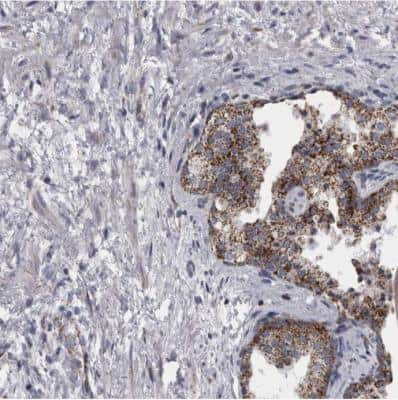

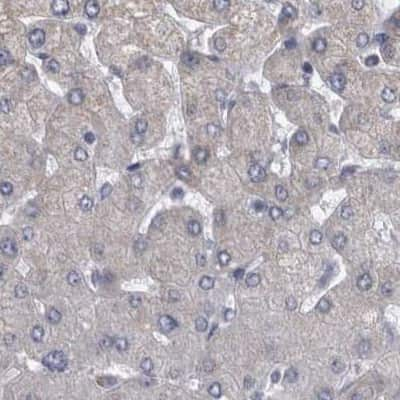
![Immunohistochemistry ACE/CD143 Antibody [Unconjugated]](https://images.novusbio.com/images2/ACE_AF1513_Immunohistochemistry_6703.jpg)
![Western Blot ACE/CD143 Antibody [Unconjugated]](https://images.novusbio.com/images2/ACE_AF1513_Flow_Cytometry_20028.jpg)
![Simple Western ACE/CD143 Antibody [Unconjugated]](https://images.novusbio.com/images2/ACE_AF1513_Simple_Western_20109.jpg)


Secondary Antibodies |
Isotype Controls |
Research Areas for Apolipoprotein E/ApoE Antibody (NB100-65261)Find related products by research area.
|
The concentration calculator allows you to quickly calculate the volume, mass or concentration of your vial. Simply enter your mass, volume, or concentration values for your reagent and the calculator will determine the rest.


![Immunohistochemistry LDLR Antibody [Unconjugated]](https://images.novusbio.com/images2/LDL_R_AF2255_Immunohistochemistry_7149.jpg)
![Western Blot LDLR Antibody [Unconjugated]](https://images.novusbio.com/images2/LDLR_AF2255_Western_Blot_23731.jpg)
![Western Blot LDLR Antibody [Unconjugated]](https://images.novusbio.com/images/af2255_mouse-ldl-r-affinity-purified-polyclonal-ab-4120241049445.jpg)


![Immunocytochemistry/ Immunofluorescence Tau [p Ser396] Antibody (SN62-09)](https://images.novusbio.com/images/Tau-p-Ser396-Antibody-SN62-09-Immunocytochemistry-Immunofluorescence-NBP2-67702-img0001.jpg)
![Immunohistochemistry-Paraffin Tau [p Ser396] Antibody (SN62-09)](https://images.novusbio.com/images/Tau-p-Ser396-Antibody-SN62-09-Immunohistochemistry-Paraffin-NBP2-67702-img0002.jpg)
![Immunohistochemistry-Paraffin Tau [p Ser396] Antibody (SN62-09)](https://images.novusbio.com/images/Tau-p-Ser396-Antibody-SN62-09-Immunohistochemistry-Paraffin-NBP2-67702-img0003.jpg)
![Immunohistochemistry Lipoprotein Lipase/LPL Antibody [Unconjugated]](https://images.novusbio.com/images2/Lipoprotein_Lipase_AF7197_Immunohistochemistry_21186.jpg)
![Western Blot Lipoprotein Lipase/LPL Antibody [Unconjugated]](https://images.novusbio.com/images2/Lipoprotein_Lipase_AF7197_Western_Blot_11656.jpg)
![Immunocytochemistry Lipoprotein Lipase/LPL Antibody [Unconjugated]](https://images.novusbio.com/images2/Lipoprotein_Lipase_AF7197_Immunocytochemistry_11911.jpg)
![Bioactivity GM-CSF [Unconjugated]](https://images.novusbio.com/images/protein/7954-gmcf_recombinant-human-gm-csf-cho-expressed-protein-cf-bioactivity-272020121514.jpg)


![SDS-PAGE TNF-alpha [Unconjugated]](https://images.novusbio.com/images2/TNF-alpha_210-TA_256.jpg)
![Bioactivity TNF-alpha [Unconjugated]](https://images.novusbio.com/images2/TNFalpha_210TA_1658.jpg)
![SEC-MALS TNF-alpha [Unconjugated]](https://images.novusbio.com/images/210-ta_recombinant-human-tnf-alpha-protein-sec-mals-35202312244..jpg)


