We're moving to rndsystems.com. Come with us!

After August 17, 2026, Novus Biologicals products and services will no longer be available on this website; you will access all products and services on rndsystems.com. Create your R&D Systems online account today.

ATG9A Antibody

Images


Product Details

Summary
Product Discontinued
View other related ATG9A Primary Antibodies

Order Details


    • Catalog Number
      R-160-100
    • Availability
      Product Discontinued

    Can't find what you are looking for? Use our Antibody Concierge Service & we will help you locate your antibody!

    Or feel free to contact us for alternative products.

ATG9A Antibody Summary

Immunogen
A synthetic peptide (CWHRRESDESGE) corresponding to the C-terminal of human APG9A (APG9L1) protein has been used as the immunogen.
Specificity
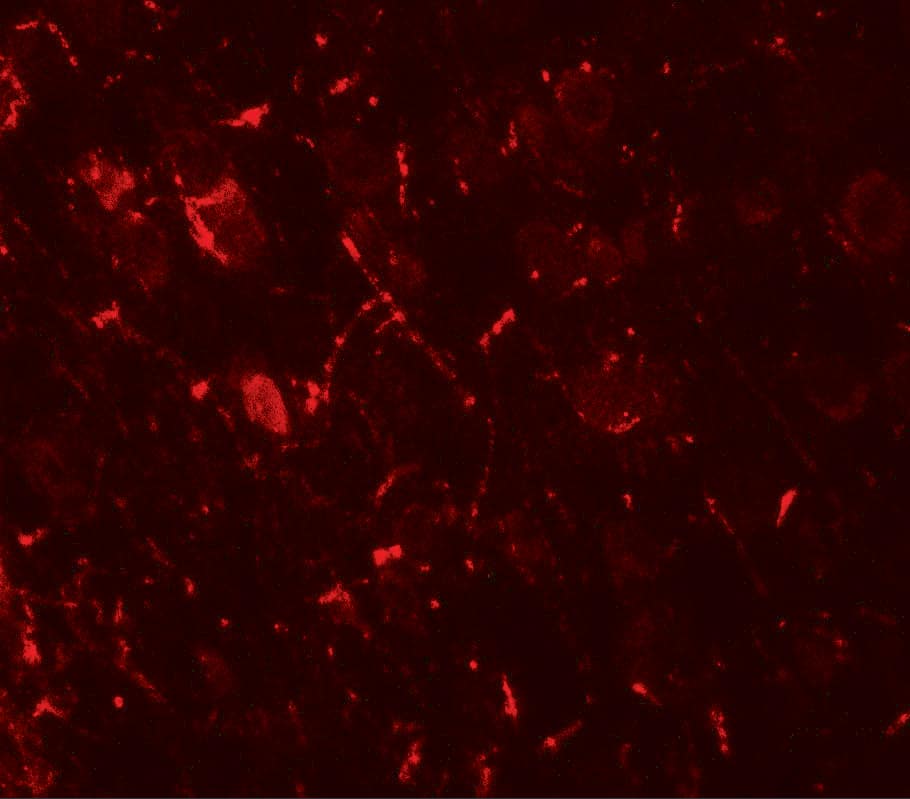
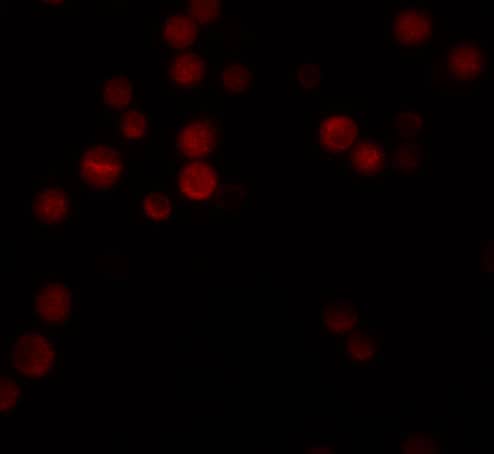
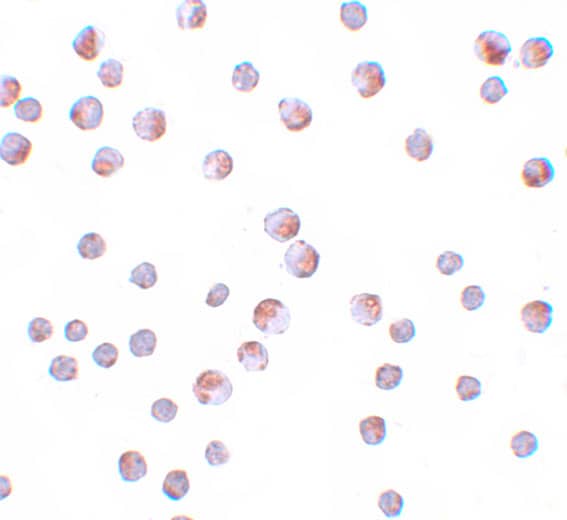
IHC, WB and ELISA confirmed the specificity for ATG9A (APG9L1).
Clonality
Polyclonal
Host
Rabbit
Gene
ATG9A
Purity
Unpurified
Innovator's Reward
Test in a species/application not listed above to receive a full credit towards a future purchase.

Applications/Dilutions

Dilutions
  • Immunocytochemistry/ Immunofluorescence 1:100-1:3000
  • Immunohistochemistry 1:100-1:3000
  • Immunohistochemistry-Paraffin
  • Western Blot 1:100-1:3000
Publications
Read Publications using
R-160-100 in the following applications:

  • WB
    1 publication

Reactivity Notes

Human, rat. The peptide is homologous with the corresponding sequence derived from APG9A (APG9L1) protein in mouse, rat, S. cerevisiae, Macaca mulatta (monkey) and Canis familiaris (dog).

Packaging, Storage & Formulations

Storage
Store at 4C short term. Aliquot and store at -20C long term. Avoid freeze-thaw cycles.
Buffer
Whole antisera
Preservative
No Preservative
Concentration
LYOPH
Purity
Unpurified
Reconstitution Instructions
Reconstitute with 0.1 ml sterilized water.

Notes

Add diH20 for desired concentration.

Alternate Names for ATG9A Antibody

  • APG9 autophagy 9-like 1 (S. cerevisiae)
  • APG9 autophagy 9-like 1
  • APG9L1APG9-like 1
  • ATG9 autophagy related 9 homolog A (S. cerevisiae)
  • autophagy 9-like 1 protein
  • autophagy-related protein 9A
  • FLJ22169
  • mATG9
  • MGD3208

Background

FUNCTION: Plays a role in autophagy. SUBCELLULAR LOCATION: Membrane; multi-pass membrane protein (Potential). ALTERNATIVE PRODUCTS: 3 named isoforms produced by alternative splicing. SIMILARITY: Belongs to the ATG9 family. IN YEAST: FUNCTION: Involved in autophagy and cytoplasm to vacuole transport (Cvt) vesicle formation. Recruites ATG23 and ATG8 to the pre-autophagosomal structure. SUBUNIT: Interacts with ATG18, ATG2 and ATG23. SUBCELLULAR LOCATION: Membrane; multi-pass membrane protein. Preautophagosomal structure; preautophagosomal structure membrane; multi-pass membrane protein. Note=Pre-autophagosomal and other perivacuolar punctate structures. The proper trafficking of ATG9 between the pre-autophagosomal structure and the other punctate structures requires ATG2, ATG18, ATG23, the ATG1-ATG13 complex and the phosphatidylinositol 3-kinase complex I. SIMILARITY: Belongs to the ATG9 family.


This product is distributed on behalf of Biosensis Pty. Ltd. of Australia.

Limitations

This product is for research use only and is not approved for use in humans or in clinical diagnosis. Primary Antibodies are guaranteed for 1 year from date of receipt.

Customers Who Viewed This Item Also Viewed...

NBP2-41217
Species: Hu, Mu, Rt
Applications: ELISA, ICC/IF, IHC,  IHC-P, WB
NBP1-77169
Species: Hu, Mu, Rt
Applications: ELISA, ICC/IF, WB
NB100-2331
Species: Am, Ca, Fi, Hu, Mu, Pl, Rt, Ze
Applications: ChIP, ChIP, ELISA, Flow, IB, ICC/IF, IHC-WhMt, IHC, IHC-Fr,  IHC-P, IP, Simple Western, SB, WB
NB100-56705
Species: Bv, Ca, Hu, Mu, Rt
Applications: ICC/IF, IHC,  IHC-P, IP, KO, Simple Western, WB
NBP1-88879
Species: Hu, Mu, Rt
Applications: ICC/IF, IHC,  IHC-P, WB
NB110-60928
Species: Al, Bv, Ca, Hu, Mu, Pm, Rt
Applications: EM, IHC,  IHC-P, WB
NBP2-67327
Species: Hu, Mu, Rt
Applications: Flow, ICC/IF, IHC,  IHC-P, IP, WB
NBP1-84267
Species: Hu
Applications: ICC/IF, IHC,  IHC-P, WB
MAB6608
Species: Hu, Mu
Applications: CyTOF-ready, ICC, IHC, ICFlow, Simple Western, WB
AF1916
Species: Hu
Applications: ICC, IHC, WB
NBP2-34294
Species: Hu, Mu, Rt
Applications: Flow, IHC,  IHC-P
NBP2-67486
Species: Hu, Mu, Rt
Applications: Flow, ICC/IF, IHC,  IHC-P, WB
NB110-53818
Species: Al, Bv, Dr, Fi, Gp, Hu, Mu, Po, Pm, Rt, Xp, Ze
Applications: EM, ELISA, Flow, IB, ICC/IF, IHC,  IHC-P, IP, KD, KO, PLA, RIA, Simple Western, WB
NBP1-18885
Species: Hu
Applications: ICC/IF, IHC,  IHC-P, IP, KO, WB
NBP2-52452
Species: Hu
Applications: CyTOF-ready, ELISA, Flow, IHC,  IHC-P, WB
NB100-77279
Species: Hu, Mu
Applications: IP, WB

Publications for ATG9A Antibody (R-160-100)(11)

Reviews for ATG9A Antibody (R-160-100) (0)

There are no reviews for ATG9A Antibody (R-160-100). By submitting a review you will receive an Amazon e-Gift Card or Novus Product Discount.
  • Review with no image -- $10/€7/£6/$10 CAD/¥70 Yuan/¥1110 Yen
  • Review with an image -- $25/€18/£15/$25 CAD/¥150 Yuan/¥2500 Yen

Product General Protocols

Find general support by application which include: protocols, troubleshooting, illustrated assays, videos and webinars.

Video Protocols

WB Video Protocol
ICC/IF Video Protocol

FAQs for ATG9A Antibody (R-160-100) (0)

There are no specific FAQs related to this product. Read our general customer & technical service FAQs.

Secondary Antibodies


Isotype Controls

Additional ATG9A Products

Research Areas for ATG9A Antibody (R-160-100)

Find related products by research area.

Blogs on ATG9A.

Liver ASK1 activates autophagy to protect against hepatic fat accumulation, non-alcoholic steatohepatitis and fibrosis
By Jamshed Arslan, Pharm. D., PhD. The most common chronic liver disorder worldwide is non-alcoholic fatty liver disease (NAFLD). This obesity-linked disorder can manifest as hepatic fat accumulation (steatosis) wit...  Read full blog post.

Mechanisms of Neurodegeneration: Protein aggregation and failure of autophagy
By Michalina Hanzel, PhDIn a series of three blog posts I will briefly explore the major cellular mechanisms responsible for many neurodegenerative disorders. The first, and perhaps the most apparent, is the accumulat...  Read full blog post.

Animal Models to Study Autophagy
By Christina Towers, PhD What is autophagy?Autophagy is the catabolic process that degrades cytoplasmic material via the lysosome. The process of macroautophagy was originally characterized in yeast, where the...  Read full blog post.

Atg9b - a marker for autophagosome induction and assembly
Atg9 is the only essential transmembrane protein involved in cellular autophagy. Autophagy regulates cellular homeostasis by allowing the turnover and recycling of misfolded proteins and damaged organelles. Formation of the double-membrane isolatio...  Read full blog post.

ATG9A - early marker autophagosome assembly
ATG9A is the only essential integral membrane protein involved in autophagy. ATG9A contains six transmembrane domains and initiates the assembly of autophagosomes. The autophagosome is a double-membrane structure that engulfs and eventually degrade...  Read full blog post.

Contact Information

Product PDFs

Calculators

Concentration Calculator

The concentration calculator allows you to quickly calculate the volume, mass or concentration of your vial. Simply enter your mass, volume, or concentration values for your reagent and the calculator will determine the rest.

=
÷

Review this Product

Be the first to review our ATG9A Antibody and receive a gift card or discount.

Bioinformatics

Gene Symbol ATG9A
Entrez
Uniprot