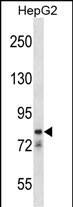
| Immunogen | A synthetic peptide as a part of human, rat and mouse amiloride-sensitive cation channel 4 (ACCN4, ASIC4) conjugated to immunogenic carrier protein was used as the immunogen. |
| Localization | Cell membrane; multi-pass membrane protein |
| Specificity | ASIC4. |
| Clonality | Polyclonal |
| Host | Rabbit |
| Gene | ASIC4 |
| Purity | Unpurified |
| Innovator's Reward | Test in a species/application not listed above to receive a full credit towards a future purchase. |
| Dilutions |
|
||
| Control |
|
| Storage | Store at 4C short term. Aliquot and store at -20C long term. Avoid freeze-thaw cycles. |
| Buffer | Whole antisera |
| Preservative | No Preservative |
| Concentration | LYOPH |
| Purity | Unpurified |
| Reconstitution Instructions | Reconstitute with 0.1 ml sterilized water to desired concentration. |


![Immunocytochemistry Osteopontin/OPN Antibody [Unconjugated]](https://images.novusbio.com/images2/Osteopontin_AF808_Immunocytochemistry__Immunofluorescence_23325.jpg)
![Neutralization Osteopontin/OPN Antibody [Unconjugated]](https://images.novusbio.com/images2/Osteopontin_AF808_Block_Neutralize_8975.jpg)
![Immunohistochemistry Osteopontin/OPN Antibody [Unconjugated]](https://images.novusbio.com/images2/Osteopontin_AF808_Immunohistochemistry_9333.jpg)
Secondary Antibodies |
Isotype Controls |
Research Areas for ACCN4 Antibody (NB110-74734)Find related products by research area.
|
The concentration calculator allows you to quickly calculate the volume, mass or concentration of your vial. Simply enter your mass, volume, or concentration values for your reagent and the calculator will determine the rest.



![SDS-PAGE TNF-alpha [Unconjugated]](https://images.novusbio.com/images2/TNF-alpha_210-TA_256.jpg)
![Bioactivity TNF-alpha [Unconjugated]](https://images.novusbio.com/images2/TNFalpha_210TA_1658.jpg)
![SEC-MALS TNF-alpha [Unconjugated]](https://images.novusbio.com/images/210-ta_recombinant-human-tnf-alpha-protein-sec-mals-35202312244..jpg)


