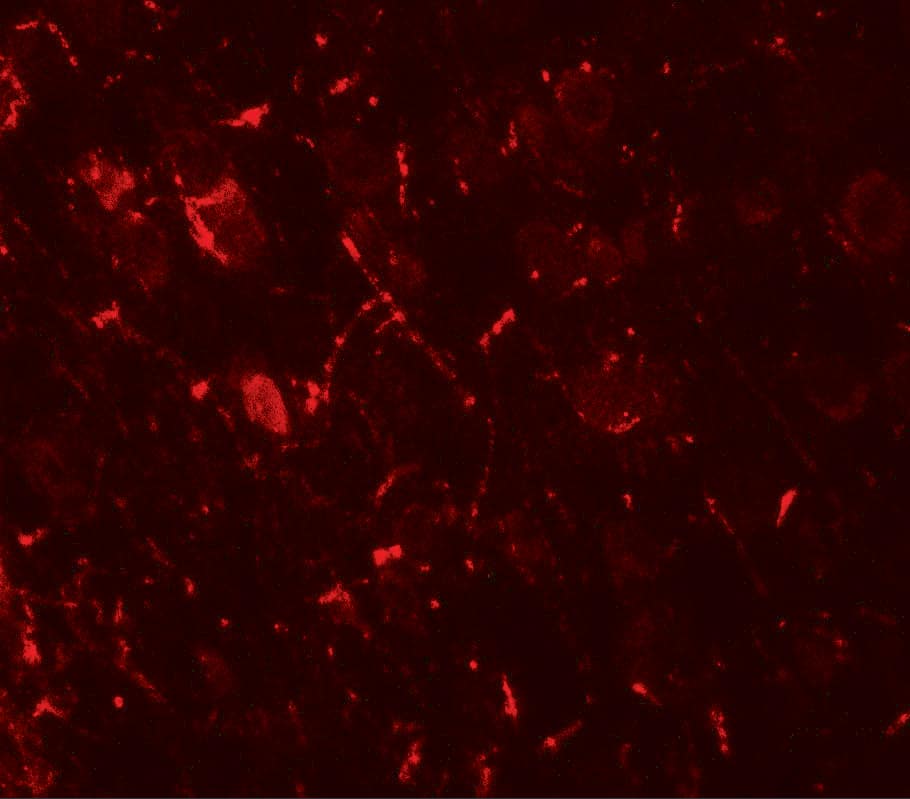
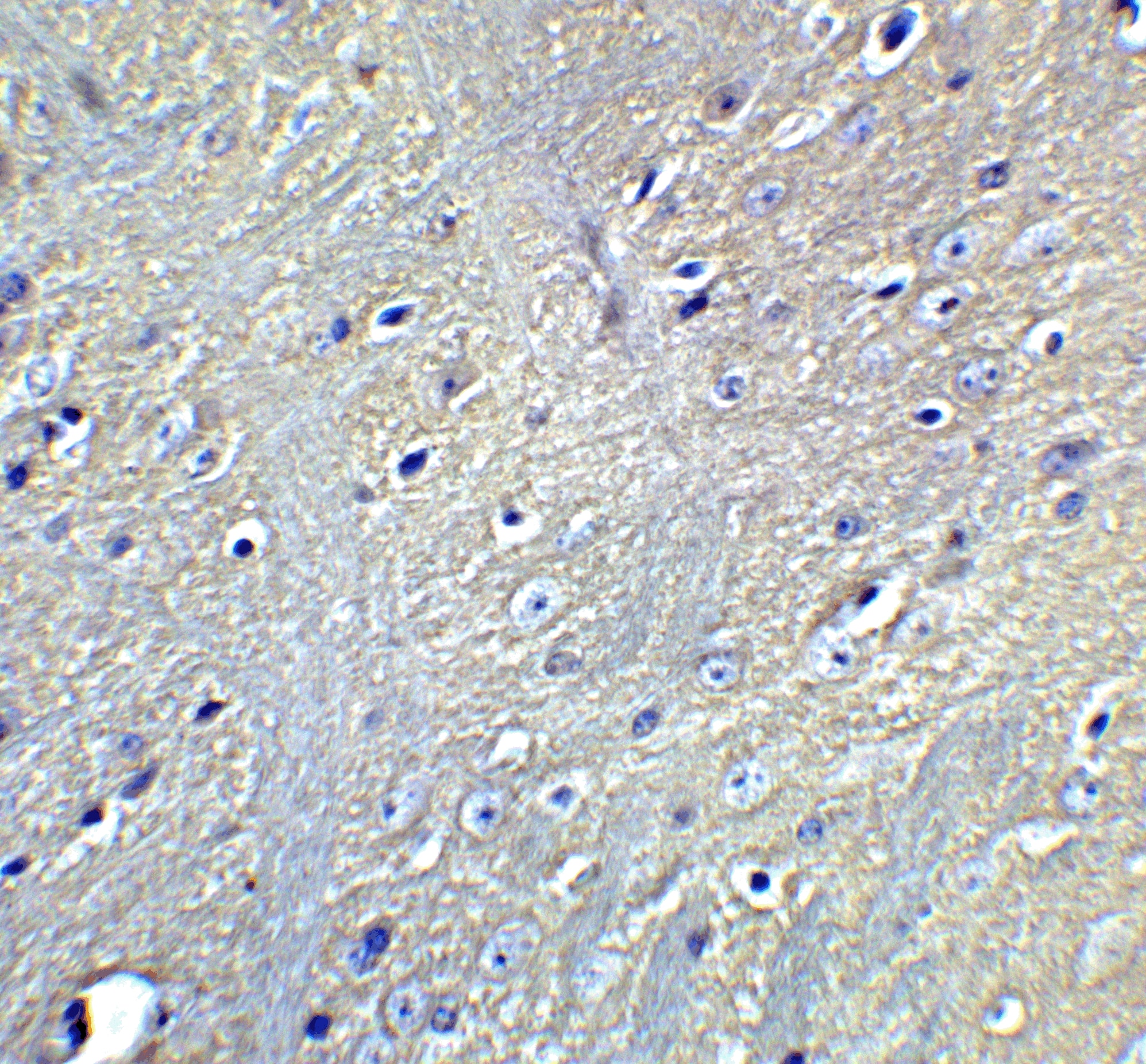
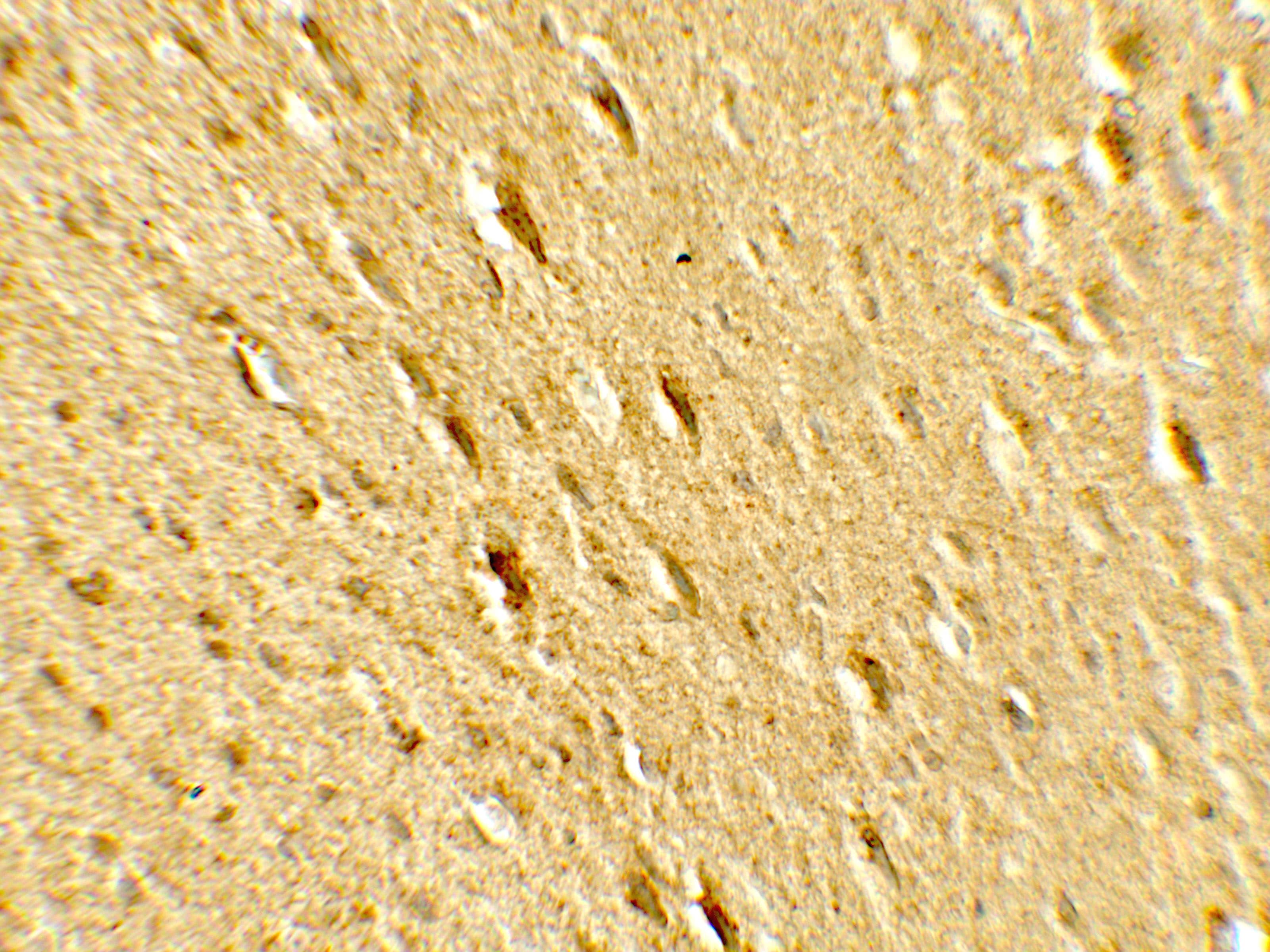
| Immunogen | A synthetic peptide as a part of drosophila autophagy-related protein 12 (ATG12, APG12, APG12L, HAPG12) conjugated to an immunogenic carrier protein has been used as the immunogen. |
| Specificity | ATG12. |
| Clonality | Polyclonal |
| Host | Rabbit |
| Gene | ATG12 |
| Purity | Unpurified |
| Innovator's Reward | Test in a species/application not listed above to receive a full credit towards a future purchase. |
| Dilutions |
|
| Storage | Store at 4C short term. Aliquot and store at -20C long term. Avoid freeze-thaw cycles. |
| Buffer | Whole antisera |
| Preservative | No Preservative |
| Concentration | LYOPH |
| Purity | Unpurified |
| Reconstitution Instructions | Please contact technical support for detailed reconstituion instruction. |


![Immunohistochemistry ATG7 Antibody (683906) [Unconjugated]](https://images.novusbio.com/images2/ATG7_MAB6608_Immunohistochemistry_10631.jpg)
![Simple Western ATG7 Antibody (683906) [Unconjugated]](https://images.novusbio.com/images2/ATG7_MAB6608_Simple_Western_16409.jpg)
![Western Blot ATG7 Antibody (683906) [Unconjugated]](https://images.novusbio.com/images2/ATG7_MAB6608_Western_Blot_11614.jpg)







Secondary Antibodies |
Isotype Controls |
Research Areas for ATG12 Antibody (NB110-74819)Find related products by research area.
|
|
Liver ASK1 activates autophagy to protect against hepatic fat accumulation, non-alcoholic steatohepatitis and fibrosis By Jamshed Arslan, Pharm. D., PhD. The most common chronic liver disorder worldwide is non-alcoholic fatty liver disease (NAFLD). This obesity-linked disorder can manifest as hepatic fat accumulation (steatosis) wit... Read full blog post. |
|
Read full blog post. |
|
Read full blog post. |
|
Animal Models to Study Autophagy By Christina Towers, PhD What is autophagy?Autophagy is the catabolic process that degrades cytoplasmic material via the lysosome. The process of macroautophagy was originally characterized in yeast, where the... Read full blog post. |
|
Autophagy independent roles of the core ATG proteins By Christina Towers, PhD. Autophagy and ATG ProteinsAutophagy is a nutrient recycling process that cells use to fuel metabolism, particularly in response to nutrient deprivation. It is critical for removal of dam... Read full blog post. |
|
WIPI1 - An essential regulator of early autophagosome assembly WD repeat domain phosphoinositide-interacting protein 1 (WIPI) is involved in the lysosomal degradation of cytoplasmic components during starvation-induced autophagy. WIPI1 is a seven bladed beta-propeller protein that provides a scaffold for the ... Read full blog post. |
|
ATG4C - A regulator of the early steps of autophagosome assembly Autophagy is an important cellular process that maintains homeostasis by degrading and recycling damaged proteins and organelles. Autophagy receptors, such as p62/SQSTM1, recognize these intracellular cargo and mediate their engulfment by the doubl... Read full blog post. |
|
ATG16L2 - An autophagy-related protein with unknown functions Autophagy is a process by which cells degrade and recycle damaged organelles or misfolded proteins. These various cargo are engulfed in a double-membrane structure called the autophagosome. The autophagosome then fuses with the lysosome to facilit... Read full blog post. |
|
ATG4D - A regulator of autophagy and apoptosis Autophagy is an essential cellular process whereby damaged proteins and organelles are degraded and recycled. Autophagy, while happening constantly at a basal level, is tightly regulated and can be further induced under cellular stress. One of the ... Read full blog post. |
|
ATG4B - a cysteine protease involved in autophagosome elongation Autophagy can be broken down into 4 main stages: phagophore nucleation, autophagosome elongation, autophagosome docking and fusion with a lysosome, and vesicle breakdown and degradation. ATG4B is one of four ATG4 homologs (ATG4A, ATG4B, ATG4C, and ... Read full blog post. |
The concentration calculator allows you to quickly calculate the volume, mass or concentration of your vial. Simply enter your mass, volume, or concentration values for your reagent and the calculator will determine the rest.


![Immunohistochemistry-Paraffin TOR/mTOR [p Ser2448] Antibody - BSA Free](https://images.novusbio.com/images/TOR-mTOR-[p-Ser2448]-Antibody-Immunohistochemistry-Paraffin-NB600-607-img0005.jpg)
![Western Blot TOR/mTOR [p Ser2448] Antibody - BSA Free](https://images.novusbio.com/images/TOR-mTOR-[p-Ser2448]-Antibody-Western-Blot-NB600-607-img0006.jpg)
![Data TOR/mTOR [p Ser2448] Antibody - BSA Free](https://images.novusbio.com/images/TOR-mTOR-[p-Ser2448]-Antibody-N-A-NB600-607-img0008.jpg)
![Western Blot Butyrylcholinesterase/BCHE Antibody [Unconjugated]](https://images.novusbio.com/images2/Butyrylcholinesterase_AF9024_Western_Blot_19121.jpg)
![Immunohistochemistry Butyrylcholinesterase/BCHE Antibody [Unconjugated]](https://images.novusbio.com/images2/Butyrylcholinesterase_AF9024_Immunohistochemistry_19158.jpg)