| Immunogen | ZNF9 (AAH00288, 1 a.a. ~ 171 a.a) full length recombinant protein with GST tag.MSSNECFKCGRSGHWARECPTGGGRGRGMRSRGRGFQFVSSSLPDICYRCGESGHLAKDCDLQEDACYNCGRGGHIAKDCKEPKREREQCCYNCGKPGHLARDCDHADEQKCYSCGEFGHIQKDCTKVKCYRCGETGHVAINCSKTSEVNCYRCGESGHLARECTIEATA |
| Specificity | zinc finger protein 9 (a cellular retroviral nucleic acid binding protein) |
| Clonality | Polyclonal |
| Host | Mouse |
| Gene | CNBP |
| Purity | Unpurified |
| Innovator's Reward | Test in a species/application not listed above to receive a full credit towards a future purchase. |
| Dilutions |
|
| Application Notes | The quality control of this antibody is limited to Western blot on the immunizing protein. It has also been used for ELISA. Abnova's recommended working dilutions for western analysis are as follows: 1:500 dilution for ascites 1:1000 for purified Ig 1:500 |
| Storage | Aliquot and store at -20C or -80C. Avoid freeze-thaw cycles. |
| Buffer | Unpurified antisera so the specific antibody concentration is unknown. Contains 50% glycerol. |
| Preservative | No Preservative |
| Purity | Unpurified |





Secondary Antibodies |
Isotype Controls |
The concentration calculator allows you to quickly calculate the volume, mass or concentration of your vial. Simply enter your mass, volume, or concentration values for your reagent and the calculator will determine the rest.


![Immunocytochemistry Insulin Antibody (182410) [Unconjugated]](https://images.novusbio.com/images2/Insulin_MAB1417_Immunocytochemistry_9376.jpg)
![Immunohistochemistry Insulin Antibody (182410) [Unconjugated]](https://images.novusbio.com/images2/mab1417_human-bovine-mouse-insulin-mab-clone-182410-immunohistochemistry-308202115145.jpg)
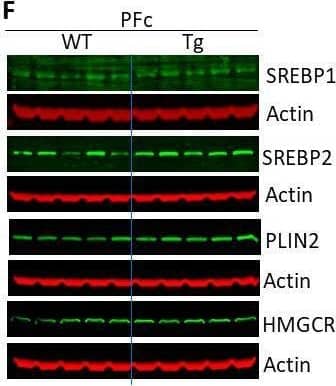
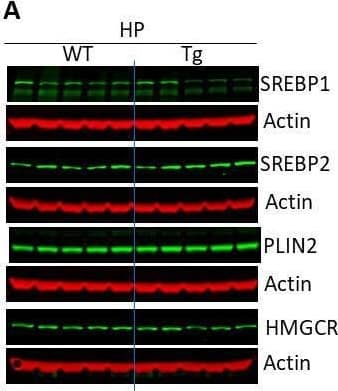


![Immunohistochemistry LDLR Antibody [Unconjugated]](https://images.novusbio.com/images2/LDL_R_AF2255_Immunohistochemistry_7149.jpg)
![Western Blot LDLR Antibody [Unconjugated]](https://images.novusbio.com/images2/LDLR_AF2255_Western_Blot_23731.jpg)
![Western Blot LDLR Antibody [Unconjugated]](https://images.novusbio.com/images/af2255_mouse-ldl-r-affinity-purified-polyclonal-ab-4120241049445.jpg)


![SDS-PAGE TNF-alpha [Unconjugated]](https://images.novusbio.com/images2/TNF-alpha_210-TA_256.jpg)
![Bioactivity TNF-alpha [Unconjugated]](https://images.novusbio.com/images2/TNFalpha_210TA_1658.jpg)
![SEC-MALS TNF-alpha [Unconjugated]](https://images.novusbio.com/images/210-ta_recombinant-human-tnf-alpha-protein-sec-mals-35202312244..jpg)


![N/A Adiponectin/Acrp30 [HRP]](https://images.novusbio.com/images2/DATA_Adiponectin_DRP300_ELISA_812.jpg)
![N/A Adiponectin/Acrp30 [HRP]](https://images.novusbio.com/images2/DATA_Adiponectin_DRP300_ELISA_813.jpg)
![N/A Adiponectin/Acrp30 [HRP]](https://images.novusbio.com/images2/Adiponectin_DRP300_ELISA_173.jpg)