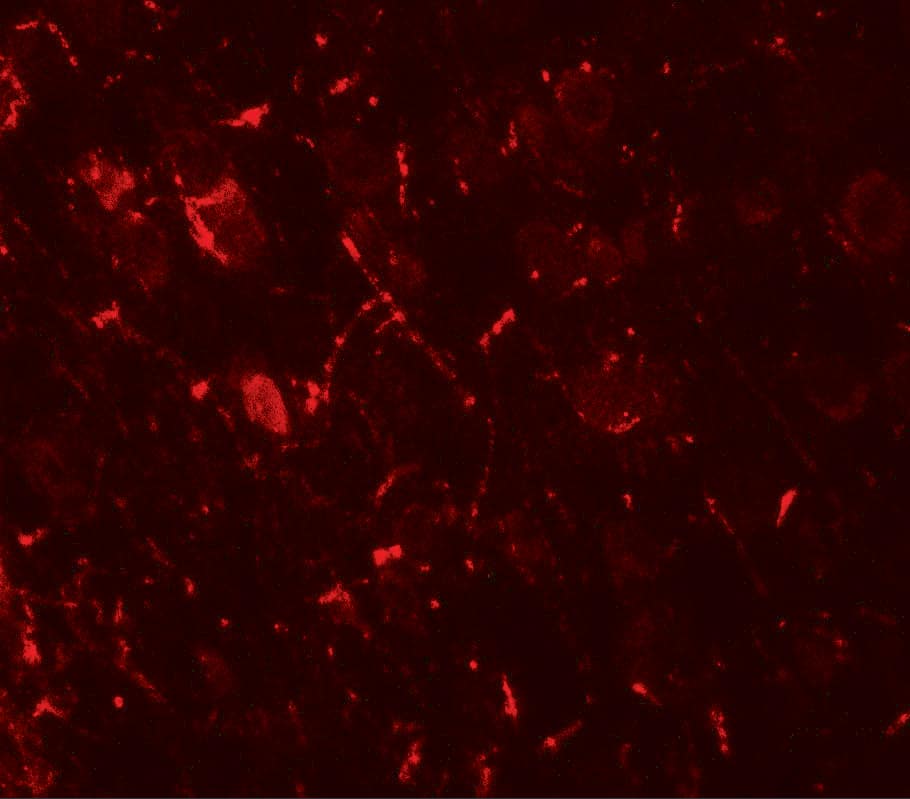
| Immunogen | A synthetic peptide corresponding to a central region of the human ATG3 protein conjugated to Blue Carrier Protein has been used as the immunogen. |
| Clonality | Polyclonal |
| Host | Rabbit |
| Gene | ATG3 |
| Purity | Unpurified |
| Innovator's Reward | Test in a species/application not listed above to receive a full credit towards a future purchase. |
| Dilutions |
|
||
| Theoretical MW | 36 kDa. Disclaimer note: The observed molecular weight of the protein may vary from the listed predicted molecular weight due to post translational modifications, post translation cleavages, relative charges, and other experimental factors. |
||
| Control |
|
||
| Publications |
|
| Storage | Store at 4C short term. Aliquot and store at -20C long term. Avoid freeze-thaw cycles. |
| Buffer | Whole antisera |
| Preservative | No Preservative |
| Concentration | LYOPH |
| Purity | Unpurified |
| Reconstitution Instructions | Reconstitute with 0.1 ml sterilized water. |

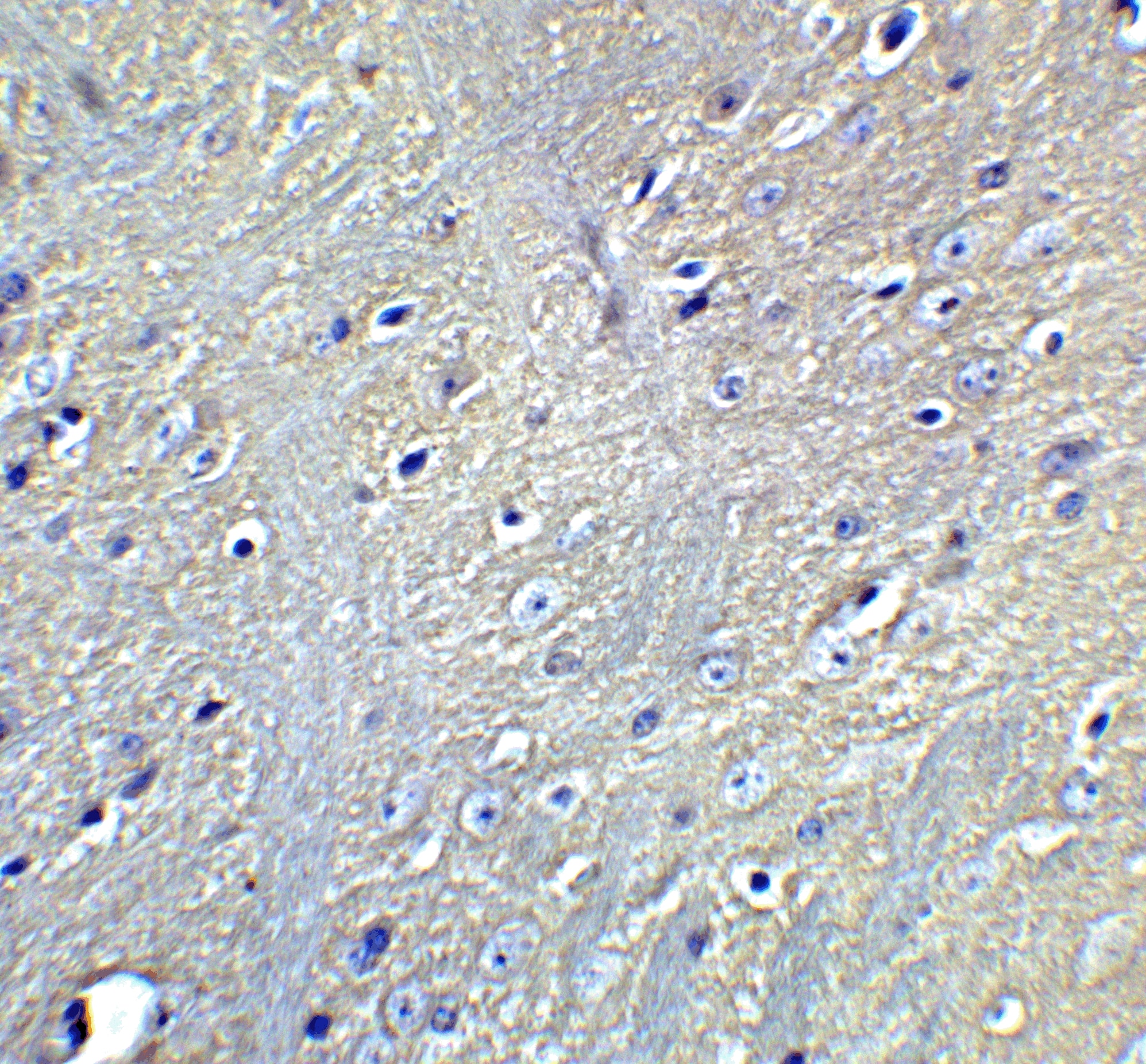
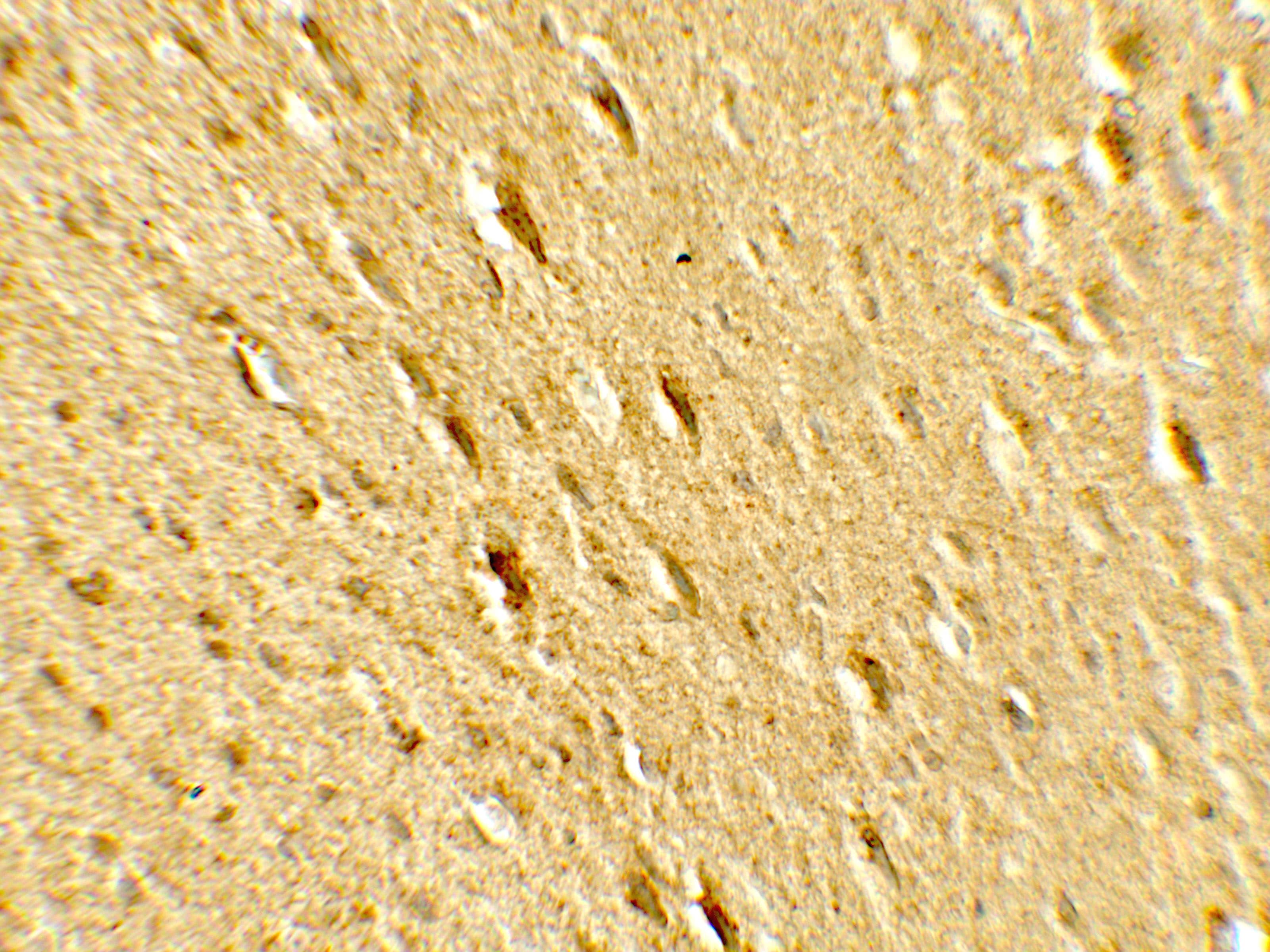
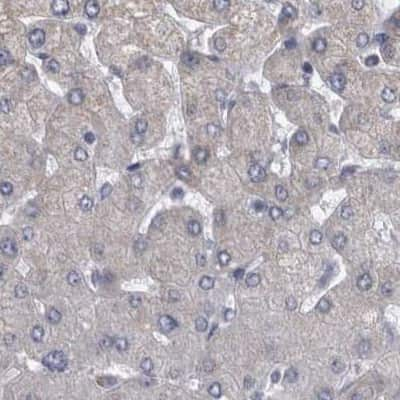
![Immunohistochemistry ATG7 Antibody (683906) [Unconjugated]](https://images.novusbio.com/images2/ATG7_MAB6608_Immunohistochemistry_10631.jpg)
![Simple Western ATG7 Antibody (683906) [Unconjugated]](https://images.novusbio.com/images2/ATG7_MAB6608_Simple_Western_16409.jpg)
![Western Blot ATG7 Antibody (683906) [Unconjugated]](https://images.novusbio.com/images2/ATG7_MAB6608_Western_Blot_11614.jpg)





Secondary Antibodies |
Isotype Controls |
Research Areas for ATG3/APG3 Antibody (R-159-100)Find related products by research area.
|
The concentration calculator allows you to quickly calculate the volume, mass or concentration of your vial. Simply enter your mass, volume, or concentration values for your reagent and the calculator will determine the rest.


![Western Blot Butyrylcholinesterase/BCHE Antibody [Unconjugated]](https://images.novusbio.com/images2/Butyrylcholinesterase_AF9024_Western_Blot_19121.jpg)
![Immunohistochemistry Butyrylcholinesterase/BCHE Antibody [Unconjugated]](https://images.novusbio.com/images2/Butyrylcholinesterase_AF9024_Immunohistochemistry_19158.jpg)
![Prolyl Oligopeptidase/PREP [Unconjugated]](/sites/all/modules/enterprise-tech/et_datasheets/images/novus_guarantee.png "Prolyl Oligopeptidase/PREP [Unconjugated]")