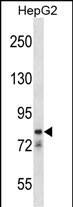
ACCN4 Antibody (NB110-74734)

ACCN4 Antibody

100% Guarantee This product is fully covered under the Novus guarantee+ Policy. Click here for details.

Distributor Data...

Loading Ajax
Loading...
Loading...Unit Size: 0.1 ml
 
Bulk Request
ACCN4 Antibody Summary:
Species:Hu, Mu, Rt
Applications:IHC-Fr, IHC-P, WB
Clonality:Polyclonal
Gene:ACCN4
Purity:Whole antisera
Host:Rabbit
Specificity:ASIC4.
Publications:Antibody has at least 2 Background References.
Note: Not all species have been tested for usefulness with this product. Only those species listed have been tested. We cannot make any guarantees about additional reactivities which may or may not occur.
View Additional ACCN4 Products
ACCN4 Antibody Details:
Immunogen:A synthetic peptide as a part of human, rat and mouse amiloride-sensitive cation channel 4 (ACCN4, ASIC4) conjugated to immunogenic carrier protein was used as the immunogen.
Localization:Cell membrane; multi-pass membrane protein
Species Reactivity:

Human, Rat and Mouse.

Applications:
Uses:Immunohistochemistry-Paraffin/Frozen and Western Blot
Dilutions:Immunohistochemistry-Frozen, Immunohistochemistry-Paraffin, Western Blot
Unit Size:0.1 ml
Concentration:lyoph
Positive Controls:1 Positive Controls
Packaging:
Storage:Store at 4 °C short term. Aliquot and store at -20 °C long term. Avoid freeze-thaw cycles.
Buffer:Lyophilized Reconstitute in 0.1 ml of sterile water. Centrifuge to remove any insoluble material. When reconstituting, glycerol (1:1) may be added for an additional stability.
Preservative:No Preservative
Limitations:This product is for research use only and is not approved for use in humans or in clinical diagnosis. Products are guaranteed for 6 months from date of receipt, except for peptides and proteins which are guaranteed for 3 months.
Gene Symbol: ACCN4
Entrez55515 (Human)
241118 (Mouse)
63882 (Rat)
Swiss ProtQ96FT7 (Human)
 
Background:

ACCN4 belongs to the superfamily of acid-sensing ion channels, which are proton-gated, amiloride-sensitive sodium channels. These channels have been implicated in synaptic transmission, pain perception as well as mechanoperception. ACCN4 is predominantly expressed in the pituitary gland, and might be a candidate for paroxysmal dystonic choreoathetosis (PDC), a movement disorder. FUNCTION: Probable cation channel with high affinity for sodium. These channels have been implicated in synaptic transmission, pain perception as well as mechanoperception. SUBUNIT: Homotetramer or heterotetramer with other ASIC proteins (Probable). SUBCELLULAR LOCATION: Membrane; Multi-pass membrane protein. TISSUE SPECIFICITY: This gene is predominantly expressed in the pituitary gland. Expressed in brain, spinal chord and dorsal root ganglion (DRG). Expressed by a subset of sensory neurons in the DRG. Expressed by granule cells in the cerebellar cortex. In hippocampus, expression is detected in dentate gyrus granule cells, in pyramidal cells of CA1-CA3 subfields and in interneurons of the striatum oriens and radiatum of all subfields. In cerebral cortex expressed in small, medium and large pyramidal cells in layers 2, 3 and 5 respectively. Also expressed in striatum, globus pallidus, inferior and superior calliculi, amygdala, magnocellular preoptic nucleus, islands of Calleja and large neurons of olfactory tubercules. DEVELOPMENTAL STAGE: Highly expressed in newborn spinal chord but hardly detected in the cerebellum compared to adult. Expressed at postnatal day 1 in ependymal cells lining the central canal of spinal chord and in motor neurons. In adult, expression decreases in ependymal cells and increases in motor neurons. The number of positive interneurons decreases but the individual interneuron expression increases in adult spinal chord compared to newborn. MISCELLANEOUS: In vitro, has no proton-gated channel activity.

Jump to: Publications, Ask a Question

Working with ACCN4

ACCN4 Antibody Images (0)
Reviews (0)  Have you used this product? Review this product to earn Novus Rewards.

Publications (2)

ACCN4 Antibody Background References:

  1. Akopian A.N, et al. NeuroReport 11:2217-2222(2000).
  2. Gruender S, et al. NeuroReport 11:1607-1611(2000).

Ask a Scientist

Can't find an answer to your question about ACCN4? Ask us by using live chat or by submitting your questions below:

 
Jump to: Positive Controls, Lysates, Primary Antibodies, RNAi, Secondary Antibodies

Related Products

Positive Controls
NameCatalog#ReactivityApplicationsImagesPublicationsReviews
ACCN4 LysateNBL1-07233WB(1)

Lysates (1)
NameCatalog#ReactivityApplicationsImagesPublicationsReviews
ACCN4 LysateNBL1-07233WB(1)

Primary Antibodies (3)
NameCatalog#ReactivityApplicationsImagesPublicationsReviews
ACCN4 AntibodyNBP1-88860HuIF, IHC-P, WB(2)

ACCN4 AntibodyNBP1-80080HuWB

RNAi (2)
NameCatalog#ReactivityApplicationsImagesPublicationsReviews
ACCN4 RNAiH00055515-R02Hu(1)(4)

ACCN4 RNAiH00055515-R01Hu(1)(4)

Secondary Antibodies
NameCatalog#ReactivityApplicationsImagesPublicationsReviews
Rabbit IgG Antibody [HRP]NB730-HRbELISA, ICC, IHC-P, WB(5)

Rabbit IgG Antibody [FITC]NB730-FRbICC, IHC-P(1)

Rabbit IgG Antibody [Biotin]NB730-BRbELISA, ICC, IHC-P, WB

Rabbit IgG Antibody [Alkaline Phosphatase]NB730-APRbELISA, ICC, IHC-P, WB(1)

Rabbit IgG Antibody [Cy3]NB120-6939RbELISA, FACS, ICC, IF, IHC-Fr, IHC-P(1)

See All »

Jump to: Novus Explorer

ACCN4 in Context


Novus Explorer for ACCN4 gene

Try our bioinformatic tool that shows the relationships between ACCN4 and other genes, diseases, pathways and post-translational modifications.